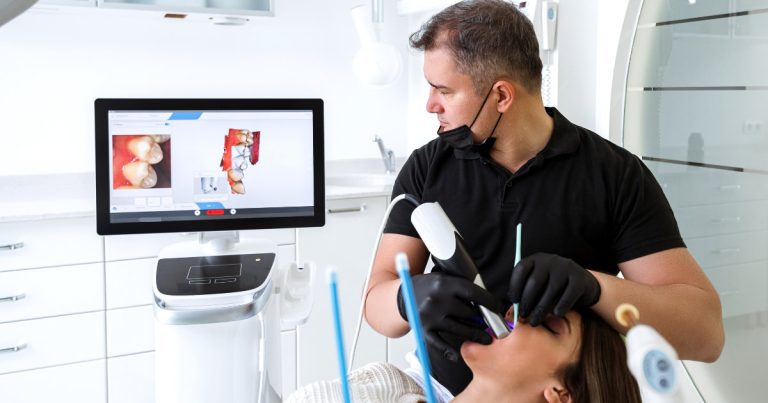
Dental Bonding

WHAT IS DENTAL BONDING?

When it comes to improving the look of your teeth, bonding is the easiest and least expensive procedure. Bonding is used when one of your teeth has been chipped, fractured, experienced decay, or is discolored. It can also be used to fill in gaps between your teeth.

TOOTH BONDING PROCEDURE

The procedure for tooth bonding is very simple and you will likely not need any kind of anesthesia for this procedure.

  • Step 1: Preparing the Tooth
    The tooth that is getting the bonding will be roughened so that the resin can adhere to the tooth. This will be done with a dental tool that acts as a small sander. If the tooth is sensitive your dentist may numb it prior to working on the tooth.  While the tooth is being prepared, the resin will be created to match the color of your natural teeth.
  • Step 2: Applying the Resin
    The resin is applied to the tooth and is sculpted to fix the problem. This includes shaping the tooth, filling in cracks, chips, or covering the tooth due to discoloration.
  • Step 3: Keeping the Resin in Place
    Once the tooth has been fixed, the dentist will use a special light on the resin to harden the material and keep it in place.
  • Step 4: Adjustments
    After the resin has hardened on your tooth, the dentist will make any necessary adjustments, like polishing, shaping, or trimming till the tooth is perfect.
    Bonding is an easy procedure that your dentist may recommend to keep your teeth healthy. In most cases, you will only need one visit for your procedure and the procedure is quite painless. It is important to remember that this information gives you a general overview of the bonding procedure. For the most accurate overview of your procedure, consult with your dentist.


Related Post

Laser Sleep Apnea Treatment

Laser Treatment for Sleep Apnea: A CPAP Alternative?

What Is Laser Treatment for Sleep Apnea? Laser treatment for sleep apnea refers to procedures that use focused laser energy to modify or strengthen soft tissues in the oral airway, aiming to reduce obstruction during sleep. There are two main categories: Laser-Assisted Uvulopalatoplasty (LAUP): A surgical approach where lasers remove or reshape portions of the soft palate and uvula. Non-Ablative Laser Therapy (e.g., NightLase®): A non-surgical, in-office treatment that uses laser energy to heat and tighten oral tissues without cutting.   These options are designed for patients seeking alternatives to Continuous Positive Airway Pressure (CPAP) therapy, especially those with

Read More »
CEREC Same-Day Crown

CEREC Same-Day Crown

Modern dental technology has introduced convenient options like CEREC same-day crowns for restoring damaged teeth. Unlike traditional crowns that require multiple visits and temporary crowns, a CEREC crown is designed, milled, and placed in a single appointment. In this comprehensive guide, we’ll explain what CEREC crowns are, who might need one, how the procedure works, and what to expect before, during, and after treatment. We’ll also cover the benefits, potential drawbacks, alternatives, costs, and address common misconceptions about same-day crowns.   What Are CEREC Same-Day Crowns? A dental crown is a custom-made “cap” that covers a damaged or weakened

Read More »

Related Post

Laser Sleep Apnea Treatment
cem

Laser Treatment for Sleep Apnea: A CPAP Alternative?

What Is Laser Treatment for Sleep Apnea? Laser treatment for sleep apnea refers to procedures that use focused laser energy to modify or strengthen soft tissues in the oral airway, aiming to reduce obstruction during sleep. There are two main categories: Laser-Assisted Uvulopalatoplasty (LAUP): A surgical approach where lasers remove or reshape portions of the soft palate and uvula. Non-Ablative Laser Therapy (e.g., NightLase®): A non-surgical, in-office treatment that uses laser energy to heat and tighten oral tissues without cutting.   These options are designed for patients seeking alternatives to Continuous Positive Airway Pressure (CPAP) therapy, especially those with

Read More »
CEREC Same-Day Crown
cem

CEREC Same-Day Crown

Modern dental technology has introduced convenient options like CEREC same-day crowns for restoring damaged teeth. Unlike traditional crowns that require multiple visits and temporary crowns, a CEREC crown is designed, milled, and placed in a single appointment. In this comprehensive guide, we’ll explain what CEREC crowns are, who might need one, how the procedure works, and what to expect before, during, and after treatment. We’ll also cover the benefits, potential drawbacks, alternatives, costs, and address common misconceptions about same-day crowns.   What Are CEREC Same-Day Crowns? A dental crown is a custom-made “cap” that covers a damaged or weakened

Read More »
Skip to content