Introduction
A dental crown is one of the most common restorative treatments in dentistry, but many patients do not fully understand why a dentist recommends one. Some people hear “you need a crown” after a tooth breaks. Others are told they need one after a root canal, because of a large old filling, or because a cracked tooth may not hold up with a simple filling.
That recommendation can raise a lot of questions. Is a crown really necessary? Is it the same as a cap? How much tooth will be removed? Will it hurt? How long will it last? Can the tooth still get a cavity? What happens if insurance does not cover it?
A dental crown is not just a cosmetic cover. It is a custom restoration designed to rebuild, protect, and strengthen a tooth that has been weakened, damaged, cracked, heavily filled, worn, or treated in a way that leaves it vulnerable. Crowns are also used on dental implants and as part of dental bridges.
This guide explains what dental crowns are, why they may be recommended, what the procedure involves, how different crown materials compare, what recovery feels like, what can go wrong, and how crowns compare with fillings, onlays, veneers, extraction, and dental implants.
This article is for patient education only. It cannot tell you whether your tooth needs a crown. That decision depends on an exam, X-rays when needed, bite evaluation, gum health, tooth structure, medical history, symptoms, and your dentist’s clinical findings.
What Is a Dental Crown?
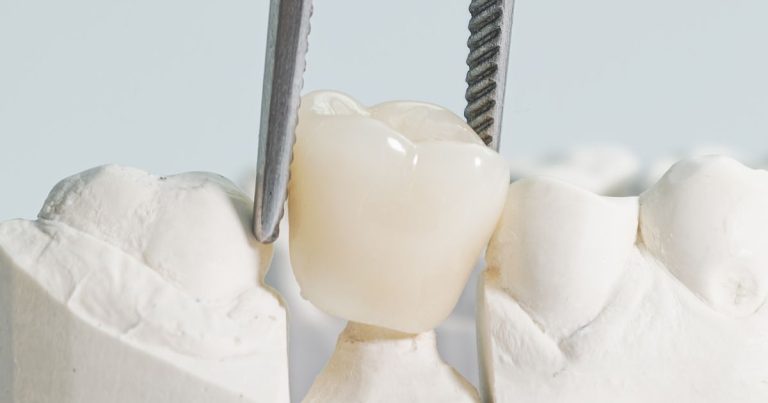
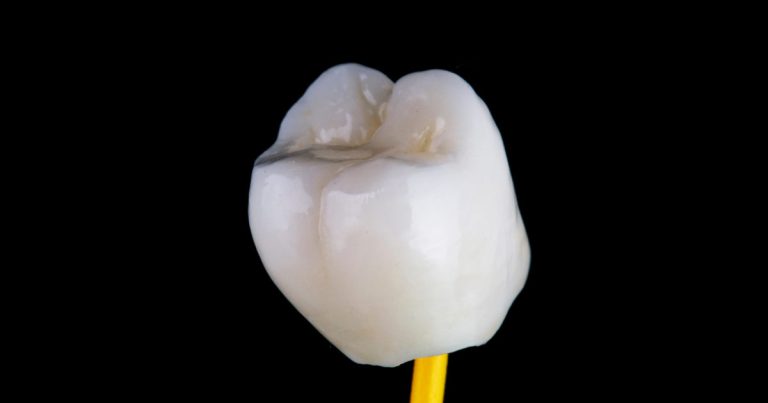
A dental crown is a tooth-shaped restoration that covers and protects the visible part of a tooth above the gumline. Many people call it a “cap” because it fits over the prepared tooth.
A crown can restore a tooth’s shape, size, strength, and appearance. It may be made from ceramic, zirconia, porcelain fused to metal, metal, resin, or other dental materials depending on the tooth, bite, appearance goals, and clinical situation.
A crown does not make a diseased tooth healthy by itself. Before a crown is placed, the dentist must evaluate and treat problems such as decay, cracks, infection, poor gum support, or failing restorations. The crown then protects and rebuilds the tooth that remains.
Is a Crown the Same as a Cap?
Yes. “Cap” is the everyday term many patients use for a dental crown. Dentists usually say “crown,” but both terms refer to the same general type of restoration.
The word “cap” can be helpful because it describes how the restoration covers the tooth. However, a crown is custom-made to fit your bite, tooth shape, gumline, and neighboring teeth. It is not a generic cover placed over an untouched tooth.
What Does a Crown Cover?
A traditional dental crown covers the prepared visible portion of the tooth. The dentist reshapes the tooth so the crown has room to fit and enough structure to hold onto.
A crown usually covers the biting surface and the sides of the tooth. It may extend close to the gumline or slightly under the gumline, depending on where the decay, fracture, or old restoration ends.
This is different from a filling, which repairs a smaller area inside the tooth, and different from a veneer, which mainly covers the front surface of a tooth for esthetic changes.
What a Crown Can and Cannot Do
A crown can:
- Rebuild a broken tooth
- Protect a weak tooth
- Cover a tooth after root canal treatment when appropriate
- Restore chewing shape
- Improve tooth appearance
- Support a dental bridge
- Restore a dental implant
- Replace an old failing crown
- Help protect a cracked tooth in selected cases
A crown cannot:
- Make a non-restorable tooth predictable
- Stop decay if plaque continues to collect around the margin
- Guarantee the tooth will never need a root canal
- Prevent every future fracture
- Replace healthy gum and bone support
- Last forever without maintenance
A crown is a strong restoration, but it is still part of a living mouth. The tooth, gumline, bite, and patient habits still matter.
Why Dental Crowns Matter
Dental crowns matter because they can help preserve teeth that might otherwise continue to break down.
A weakened tooth may be difficult to treat with a filling alone. If too much tooth structure is missing, a large filling may flex, crack, leak, or fail. A crown can cover and protect the remaining tooth structure, distribute chewing forces, and restore function.
Crowns can matter for:
- Chewing comfortably
- Protecting cracked or weakened teeth
- Restoring teeth with large old fillings
- Rebuilding teeth after root canal therapy
- Improving the appearance of severely damaged or discolored teeth
- Supporting dental bridges
- Restoring dental implants
- Helping avoid extraction when the tooth can still be saved
The key phrase is “when the tooth can still be saved.” A crown is valuable when the tooth has enough remaining structure, root support, gum support, and long-term prognosis to justify treatment. If a tooth is too damaged, extraction and replacement may be more predictable.
Who Might Need a Dental Crown?
A dentist may recommend a crown when a tooth needs more protection than a filling can provide.
Common reasons include:
- A large cavity
- A cracked tooth
- A broken tooth
- A tooth with a large old filling
- A tooth that has had root canal treatment
- A worn-down tooth from grinding
- A misshapen tooth
- A severely discolored tooth
- A tooth supporting a dental bridge
- A dental implant that needs a final restoration
- An old crown that is loose, leaking, cracked, or failing
- A baby tooth with extensive decay or pulp treatment
A crown recommendation is usually about function and protection, not only appearance.
Large Fillings and Weak Teeth
A tooth with a small cavity can often be repaired with a filling. A tooth with a very large cavity or large existing filling may not have enough strength left for another filling to last predictably.
When a filling becomes too large, the remaining tooth walls can be thin and vulnerable. A crown may be recommended to hold the tooth together and protect it from chewing forces.
Cracked, Chipped, or Broken Teeth
A cracked or broken tooth may need a crown if the damage affects the strength of the tooth. Crowns can help protect selected cracked teeth by covering the biting surface and holding the tooth together.
Not every crack can be fixed with a crown. A small chip may need bonding. A deeper crack may need a crown. A crack that extends too far below the gumline or down the root may make the tooth non-restorable.
This is one of the most important areas where a dentist’s diagnosis matters.
Root-Canal-Treated Teeth
Many teeth that have had root canal treatment need a crown afterward, especially molars and premolars. Back teeth handle heavy chewing forces and are often already weakened by decay, cracks, or large fillings before root canal therapy.
However, not every root-canal-treated tooth automatically needs a crown. Some front teeth with minimal structural damage may be restored differently. The decision depends on tooth location, remaining tooth structure, bite forces, crack risk, and the final restoration plan.
Worn-Down Teeth
Teeth can wear down from grinding, clenching, acid erosion, or long-term bite stress. If wear becomes severe, crowns may be used to rebuild tooth height, protect exposed dentin, restore function, or improve appearance.
Severe wear cases often require careful bite planning. Simply placing crowns on worn teeth without addressing grinding or bite forces can lead to chipped restorations, sensitivity, or repeated failure.
Cosmetic and Shape Concerns
Crowns can improve the appearance of teeth that are severely discolored, misshapen, undersized, heavily restored, or structurally damaged.
However, if the tooth is mostly healthy and the concern is mainly cosmetic, a more conservative treatment such as whitening, bonding, or veneers may be considered first.
Children and Baby Teeth
Children can need crowns too. Pediatric crowns are often used when a baby tooth has extensive decay, has had pulp therapy, or is at high risk of breaking down before it is ready to fall out naturally.
Baby-tooth crowns are usually not the same as adult crowns. Stainless steel crowns are commonly used for back baby teeth. Tooth-colored pediatric crowns may be used in selected cases, especially when appearance matters, but they may require different preparation and have different tradeoffs.
Signs You Should Talk to a Dentist About a Crown
You should ask a dentist about a crown or crown alternatives if you notice:
- A cracked tooth
- A broken cusp or tooth corner
- A large filling that feels loose
- A tooth that hurts when biting
- Pain when releasing your bite
- A tooth that feels weak after a root canal
- A crown that feels loose
- A crown that fell off
- A chipped or broken crown
- A dark line or gap near a crown edge
- Food trapping around an old crown
- Bad taste or odor near a crown
- Gum irritation around a crown
- A worn-down tooth
- A tooth that has had repeated fillings
These signs do not automatically mean a crown is needed. They mean the tooth should be evaluated.
A tooth can be badly weakened without severe pain. A tooth can also hurt for reasons that do not require a crown, such as a high filling, gum problem, sinus pressure, or inflamed pulp. Symptoms are clues, not a final diagnosis.
What Causes the Need for a Dental Crown?
A crown is usually recommended because a tooth has lost strength, structure, or predictability.
Tooth Decay
Decay can destroy enamel and dentin. When the cavity is small or moderate, a filling may be enough. When decay is extensive, a filling may not provide enough support.
If the cavity reaches deep into the tooth, the dentist may also need to evaluate whether the pulp is healthy or whether root canal treatment is needed before the crown.
Recurrent Decay Around Old Dental Work
Old fillings and crowns can develop gaps, wear, cracks, or leakage. Bacteria can collect around the edges and cause new decay.
Recurrent decay is one of the most common reasons an old crown needs replacement. The crown material itself does not decay, but the tooth underneath can.
Fracture or Structural Weakness
Teeth can fracture because of large fillings, trauma, biting hard foods, grinding, or natural weakening over time. A crown may be used to protect the tooth if the fracture pattern is manageable.
If the fracture extends too deeply, crown treatment may not be enough.
Grinding and Clenching
Bruxism can place heavy forces on teeth and crowns. Over time, this can cause tooth wear, cracks, broken restorations, and jaw symptoms.
If you grind or clench, your dentist may recommend a stronger crown material, bite adjustment, or night guard.
Acid Erosion
Acid from diet, reflux, vomiting, or other causes can wear away enamel. Severe erosion can expose dentin, change the bite, and weaken teeth. Crowns may be part of a larger restorative plan in advanced cases.
Trauma
A fall, sports injury, or accident can chip, crack, or break a tooth. Depending on the damage, treatment may involve bonding, a veneer, a crown, root canal therapy, or extraction.
What Happens During a Dental Crown Consultation?
A crown consultation helps the dentist decide whether the tooth is restorable and whether a crown is the best option.
The dentist may review:
- Your symptoms
- How long the problem has been present
- What triggers pain or sensitivity
- Prior fillings, crowns, or root canal treatment
- Your bite and grinding habits
- Your gum health
- Your medical history
- Your medications
- Your cosmetic goals
- Your budget and insurance concerns
The dentist may also take X-rays, photos, or digital scans. If nerve health is uncertain, they may test the tooth’s response to cold or other stimuli. If gum disease or a crack is suspected, the dentist may check pocket depths around the tooth.
What Does “Restorable” Mean?
A tooth is restorable if it has enough healthy structure, root support, and gum support to hold a restoration predictably.
Restorability depends on:
- How much tooth is left
- How deep the decay goes
- Whether the tooth is cracked
- Whether the crack extends below the gumline
- Whether the pulp is healthy
- Whether the tooth needs root canal treatment
- How much bone support remains
- Whether the gumline allows a clean crown margin
- Whether the patient can clean the area
- Whether the bite will overload the tooth
- Whether the cost and prognosis make sense
A crown is not always the right answer. Sometimes a filling or onlay is enough. Sometimes the tooth is too damaged and extraction should be discussed.
Will You Need X-Rays?
Often, yes. X-rays can help the dentist see decay, old restorations, bone levels, root shape, infection, and other problems that are not visible during a visual exam.
Dental X-rays should be chosen based on the patient’s situation. They are not taken simply because “everyone needs the same images.”
Is CBCT or 3D Imaging Needed for a Crown?
Usually, a standard crown does not require CBCT imaging.
A CBCT scan may be considered in selected complex cases, such as suspected root fracture, complicated root canal evaluation, unusual anatomy, implant planning, or a problem that cannot be understood with standard X-rays.
CBCT should not be presented as routine for every crown case.
Will the Dentist Check the Nerve?
If the tooth has symptoms or deep decay, the dentist may evaluate the pulp, or “nerve,” before placing a crown.
A tooth may need a crown but still have a healthy pulp. Another tooth may need root canal treatment before the crown. If a crown is placed on a tooth with a severely inflamed or infected pulp, symptoms may continue or worsen.
This is why symptoms such as lingering cold pain, spontaneous toothache, swelling, or pain that wakes you up should be discussed before crown treatment.
Dental Crown vs Filling, Onlay, Veneer, Bridge, and Implant Crown
Patients often hear several restorative terms and are not sure how they differ.
Crown vs Filling
A filling repairs a smaller area of damaged tooth. It is placed inside the tooth after decay is removed.
A crown covers the tooth more completely. It is used when the tooth needs more protection, strength, or coverage than a filling can provide.
A filling is usually more conservative because less tooth structure is removed. A crown may be more protective when the tooth is already weak.
Crown vs Inlay or Onlay
An inlay fits inside the cusps of a back tooth. An onlay covers one or more cusps but may not cover the entire tooth the way a crown does. An overlay is a broader type of cuspal-coverage restoration that may still preserve more tooth structure than a full crown.
Inlays and onlays can be good conservative options for selected teeth. They may preserve more natural tooth structure than a crown. However, not every tooth is a candidate. A badly cracked, heavily weakened, or structurally compromised tooth may need full coverage.
Crown vs Veneer
A veneer is a thin restoration, usually placed on the front surface of a front tooth. Veneers are commonly used for cosmetic concerns such as shape, color, or minor spacing.
A crown covers more of the tooth and is often used when the tooth needs structural support as well as appearance improvement.
If the tooth is healthy and the concern is mainly cosmetic, a veneer may be more conservative. If the tooth is heavily filled, cracked, severely worn, or structurally weak, a crown may be more appropriate.
Crown vs Bridge
A crown restores one tooth. A bridge replaces a missing tooth by anchoring to neighboring teeth or implants.
A traditional bridge uses crowns on the neighboring teeth to support a false tooth in the middle. These supporting crowns are called retainers.
Crown on a Tooth vs Crown on an Implant
A natural-tooth crown is cemented or bonded over a prepared tooth.
An implant crown attaches to an abutment connected to a dental implant. The implant replaces the missing tooth root, and the crown is the visible tooth on top.
The crown may look similar, but the biology and maintenance are different.
Types of Dental Crowns
There is no single “best” crown for every patient. The best material depends on tooth location, bite forces, esthetic needs, gumline position, available space, cost, allergies or sensitivities, and the dentist’s clinical judgment.
Metal Crowns
Metal crowns may be made from gold alloy or other dental alloys. They are very durable and often require less tooth reduction than some tooth-colored crowns.
Advantages may include:
- Excellent strength
- Good durability
- Less chipping than porcelain
- Less tooth reduction in some cases
- Long history of use
Tradeoffs may include:
- Metal color
- Less esthetic for visible teeth
- Possible material concerns in rare patients
- Higher material cost for some alloys
Metal crowns are often most useful on back teeth where strength matters more than appearance.
Porcelain-Fused-to-Metal Crowns
Porcelain-fused-to-metal crowns, often called PFM crowns, have a metal substructure covered with tooth-colored porcelain.
Advantages may include:
- Strength from metal support
- Tooth-colored appearance
- Long clinical history
- Useful in many restorative situations
Tradeoffs may include:
- Porcelain can chip
- A dark line may show near the gumline in some cases
- More tooth reduction may be needed than for some metal crowns
- Esthetics may be less lifelike than some all-ceramic options
PFM crowns have been used for many years and can still be appropriate in selected cases.
All-Ceramic or Porcelain Crowns
All-ceramic crowns are tooth-colored restorations without a metal substructure. They are often used when esthetics are important, especially for front teeth.
Advantages may include:
- Natural-looking appearance
- No metal color near the gumline
- Good option for visible teeth
- Available through lab or some same-day systems
Tradeoffs may include:
- Material strength varies by ceramic type
- May require adequate thickness
- Can chip or fracture under certain forces
- May not be ideal for every heavy-bite situation
Zirconia Crowns
Zirconia is a strong ceramic material commonly used for crowns. It can be highly durable and may be used for back teeth, front teeth, bridges, and implant crowns depending on the design.
Advantages may include:
- High strength
- Tooth-colored appearance
- Useful for heavy-bite areas in many cases
- Can be made in monolithic or layered forms
Tradeoffs may include:
- Esthetics vary by zirconia type
- Some highly translucent zirconia may be less strong than opaque versions
- Can be difficult to adjust and polish properly
- May be too hard or abrasive if not finished correctly
- Not automatically best for every tooth
Zirconia is popular, but popularity does not mean it is the right material for every case.
Resin or Acrylic Crowns
Resin and acrylic crowns are often used as temporary crowns. They are usually not as durable as final ceramic, zirconia, PFM, or metal crowns.
A temporary crown protects the tooth while the final crown is being made. It is not meant to handle long-term chewing forces.
Pediatric Stainless Steel Crowns
Stainless steel crowns are commonly used for baby molars with extensive decay, after certain pulp treatments, or in high-risk situations where a large filling may fail.
They are durable, efficient, and commonly used in pediatric dentistry. They are silver-colored, so they are usually used on back teeth.
Pediatric Tooth-Colored Crowns
Tooth-colored pediatric crowns may be used when appearance is important, especially for front baby teeth or selected back teeth. They may be made from zirconia or other prefabricated esthetic materials.
They can look more natural than stainless steel crowns but may require different tooth preparation and may not be ideal in every situation.
Same-Day Crowns vs Traditional Crowns
Some dental offices offer same-day crowns using CAD/CAM technology. CAD/CAM stands for computer-aided design and computer-aided manufacturing.
With a same-day crown, the dentist prepares the tooth, takes a digital scan, designs the crown, mills it from a ceramic block, and places it in one visit when the case is appropriate.
A traditional crown usually involves a first visit to prepare the tooth and take an impression or scan, a temporary crown while a dental lab makes the final crown, and a second visit to place the final restoration.
Benefits of Same-Day Crowns
- Same-day crowns may offer:
- Fewer appointments
- No temporary crown in many cases
- Digital scanning instead of traditional impressions
- Fast restoration of the tooth
- Convenience for busy patients
Limitations of Same-Day Crowns
Same-day crowns are not ideal for every situation.
Limitations may include:
- Material choices may be more limited
- Very complex aesthetic cases may benefit from a lab
- Some bite situations may require different planning
- Multiple crowns may be more complex
- Subgingival margins can be harder to scan
- Severe damage may require additional steps
Patients should be cautious about claims that same-day crowns are always better. They are a workflow option, not a guarantee of superior treatment.
Are Lab Crowns Better?
Not automatically.
A high-quality lab crown can be excellent. A well-made same-day crown can also be excellent in the right case. The quality depends on diagnosis, preparation, material, design, fit, bite adjustment, bonding or cementation, and maintenance.
The better question is: which workflow and material make the most sense for this tooth?
What Happens During a Dental Crown Procedure?
A crown procedure usually involves reshaping the tooth, making or ordering the crown, and placing the final restoration.
Step 1: Diagnosis and Treatment Planning
Before preparing the tooth, the dentist confirms that a crown is appropriate. This may involve X-rays, visual exam, bite evaluation, periodontal probing, pulp testing, or discussion of alternatives.
The dentist should also explain why a filling, onlay, veneer, or extraction is or is not appropriate.
Step 2: Numbing the Tooth
Most crown preparations are done with local anesthetic. The tooth and surrounding gum tissue are numbed so the dentist can remove decay, reshape the tooth, and work comfortably.
If the tooth has had a root canal, anesthesia may still be used because the surrounding gum tissue and tooth-supporting structures can still feel pressure or irritation.
Step 3: Removing Decay or Old Restorations
The dentist removes decay, weakened tooth structure, or failing filling material. If an old crown is being replaced, the dentist removes the old crown and evaluates the tooth underneath.
Sometimes the dentist discovers more damage than expected once the old restoration is removed. If the tooth is not restorable, the plan may change.
Step 4: Building Up the Tooth if Needed
If too much tooth structure is missing, the dentist may place a core buildup. This is a restorative material used to rebuild the tooth enough to support a crown.
A buildup is not the same as a crown. It is the foundation under the crown.
Step 5: Post Placement in Selected Cases
A post may be used in some root-canal-treated teeth when there is not enough tooth structure to hold the core buildup.
A post does not strengthen the root. It helps retain the buildup. Posts are not needed for every root-canal-treated tooth and should be used only when appropriate.
Step 6: Tooth Preparation
The dentist reshapes the tooth so the crown can fit over it. This involves removing some enamel and tooth structure from the top and sides of the tooth.
This step is irreversible. The amount removed depends on the crown material, tooth position, decay, existing restorations, bite, and esthetic needs.
A crown needs enough room to be strong without making the tooth too bulky. The dentist must balance preserving tooth structure with creating enough space for the restoration.
Step 7: Impression or Digital Scan
The dentist takes a record of the prepared tooth and surrounding teeth. This may be done with traditional impression material or a digital scanner.
The crown must fit the tooth, contact neighboring teeth properly, and match the bite.
Step 8: Temporary Crown
For traditional lab-made crowns, a temporary crown is placed while the final crown is fabricated.
The temporary protects the prepared tooth, helps maintain spacing, and allows you to chew carefully. It is not as strong or precisely fitted as the final crown.
Step 9: Final Crown Try-In
At the delivery visit, the dentist removes the temporary crown and tries in the final crown.
They check:
- Fit
- Margins
- Bite
- Tooth contacts
- Shape
- Color
- Comfort
- Gum response
You should tell the dentist if the bite feels high or the crown feels uncomfortable.
Step 10: Cementing or Bonding the Crown
Once the fit and bite are acceptable, the crown is cemented or bonded in place. The dentist removes excess cement and checks your bite again.
Some crowns may need minor adjustments after you have chewed on them for a few days.
How Much Tooth Gets Shaved Down for a Crown?
The amount of tooth reduction depends on the crown material, tooth location, existing damage, and bite.
A crown needs enough thickness to be strong and look right. Metal crowns may require less tooth reduction in some cases. Some ceramic materials need more space for strength and aesthetics. Teeth with large cavities or old fillings may already be missing a lot of structure before preparation begins.
Patients sometimes worry that the dentist is “shaving down a healthy tooth.” In a crown candidate, the tooth is usually already structurally compromised. Still, crown preparation is irreversible, which is why alternatives should be discussed when a more conservative option is reasonable.
Does Getting a Crown Hurt?
Most crown procedures are not painful when the tooth is properly numbed.
You may feel:
- Pressure
- Vibration
- Water spray
- Suction
- Jaw fatigue
- Gum pressure
- A sensation of movement
You should not have to tolerate sharp pain. If you feel pain during the procedure, tell the dental team.
What About Dental Anxiety?
If you are anxious, tell the office before the appointment. Depending on the provider and your health history, options may include extra explanation, breaks, nitrous oxide, oral sedation, or referral for more advanced sedation.
Sedation availability varies. It is not automatically necessary for crown treatment, but it may help some patients.
Is Sensitivity Normal After a Crown?
Some sensitivity can be normal after crown preparation or placement, especially if the tooth still has a living pulp.
You may notice sensitivity to cold, heat, air, sweets, or biting. Mild sensitivity often improves over days or a couple of weeks.
Call your dentist if:
- Pain is severe
- Sensitivity is worsening
- Pain wakes you up
- Biting pain is sharp or persistent
- The bite feels high
- The gum is swelling
- The temporary crown falls off
- The final crown feels loose
A crowned tooth can still need root canal treatment later if the pulp becomes inflamed or infected. This does not always mean the crown was done incorrectly. The tooth may have been deeply decayed, cracked, or already irritated before treatment.
Recovery and Aftercare
Most people return to normal activities after a crown appointment. The main aftercare concerns involve numbness, temporary crown protection, sensitivity, and cleaning.
After the First Appointment
If you received local anesthetic, avoid chewing until numbness wears off. This helps prevent biting your cheek, lip, or tongue.
If you have a temporary crown, chew carefully and avoid hard or sticky foods.
What Can You Eat With a Temporary Crown?
Temporary crowns are more fragile than final crowns. They can loosen or break if stressed.
Avoid:
- Sticky candy
- Caramels
- Taffy
- Gum
- Hard nuts
- Ice
- Popcorn kernels
- Hard pretzels
- Very crunchy foods
- Chewing directly on the temporary crown when possible
Choose softer foods and chew on the opposite side if the tooth feels tender.
How Do You Floss Around a Temporary Crown?
Floss gently. In many cases, it is safer to slide the floss out from the side rather than snapping it back upward. Pulling upward can sometimes loosen a temporary crown.
Ask your dental office for specific instructions.
Caring for a Permanent Crown
A permanent crown should be cared for much like a natural tooth.
- Brush twice daily with fluoride toothpaste.
- Floss daily.
- Clean carefully around the crown margin.
- Keep regular dental visits.
- Avoid chewing ice or very hard objects.
- Wear a night guard if recommended.
- Report looseness, pain, or gum swelling.
The crown itself cannot decay, but the tooth at the crown edge can. Good cleaning around the margin is essential.
Can You Whiten a Crown?
Crowns do not whiten the same way natural teeth do. If you whiten your natural teeth after getting a crown, the crown may no longer match.
If you are planning whitening and a visible crown, ask your dentist about the best sequence. Often, whitening is done before choosing the final crown shade.
How Long Do Dental Crowns Last?
Dental crowns can last many years, but they do not last forever for everyone.
Longevity depends on:
- Crown material
- Tooth location
- Quality of fit
- Remaining tooth structure
- Bite forces
- Grinding or clenching
- Oral hygiene
- Diet
- Dry mouth
- Gum recession
- Cavity risk
- Whether the tooth has had a root canal
- Regular dental care
Published studies often report high survival for many crown materials over shorter and medium-term periods, but real-world lifespan varies.
A crown may last a long time and still need repair, adjustment, or replacement eventually.
Why Crowns Fail
Crowns can fail because of:
- Decay at the margin
- Crown loosening
- Cement washout
- Tooth fracture
- Root fracture
- Porcelain chipping
- Material fracture
- Bite problems
- Grinding
- Gum recession
- Poor fit
- Poor cleaning access
- Trauma
- Root canal problems
A crown failure is not always the crown material’s fault. Often, the tooth-crown-gum-bite system fails because one part of the system changes.
Can a Crown Be Repaired?
Sometimes. A small chip may be smoothed or repaired. A loose crown may be recemented if the tooth underneath is healthy and the crown still fits. A crown with decay underneath may need replacement. A fractured tooth may not be restorable.
Only a dentist can determine whether repair, replacement, root canal treatment, or extraction is needed.
Can a Crowned Tooth Still Get a Cavity?
Yes.
The crown material cannot get a cavity, but the tooth underneath can decay at the edge of the crown. This is called recurrent decay.
Decay around a crown may happen if plaque collects near the margin, the gum recedes, the crown leaks, dry mouth increases cavity risk, or home care becomes difficult.
Signs may include:
- Bad taste
- Food trapping
- Sensitivity
- Darkness near the crown edge
- Gum irritation
- Crown looseness
- Pain
- A cavity found on an X-ray or exam
Sometimes there are no symptoms at first.
Why a Crown After a Root Canal Is Often Important
A root canal treats the inside of the tooth. A crown protects the outside structure when needed.
Back teeth often need crowns after root canal therapy because they handle heavy chewing forces and are commonly weakened by decay, cracks, or large fillings. Without proper restoration, a root-canal-treated tooth may be more vulnerable to leakage or fracture.
However, the statement “every root canal tooth needs a crown” is too broad. Tooth type, remaining structure, bite, and location matter.
A front tooth with minimal damage may not need the same restoration as a heavily filled molar. A cracked premolar may need different protection than an intact front tooth.
The best question is not “Do all root canals need crowns?” but “Does this tooth need cuspal coverage or full coverage to function predictably?”
Benefits of Dental Crowns
Dental crowns can provide several benefits when they are well planned.
They can:
- Protect a weakened tooth
- Restore a broken tooth
- Rebuild chewing function
- Improve tooth shape
- Improve tooth appearance
- Cover severe discoloration
- Protect selected cracked teeth
- Restore a tooth after root canal treatment
- Support a dental bridge
- Restore a dental implant
- Help preserve a natural tooth
Crowns are especially valuable when a tooth is too compromised for a filling but still worth saving.
Risks, Downsides, and Limitations
Dental crowns are common, but they are not risk-free.
Irreversible Tooth Reduction
A crown requires reshaping the tooth. Once a tooth is prepared for a full crown, it will always need a crown or similar restoration.
This is why conservative options should be considered when they are appropriate.
Sensitivity or Nerve Irritation
Some teeth are sensitive after crown preparation. In some cases, a tooth may later need root canal treatment.
This risk is higher when the tooth had deep decay, large restorations, cracks, or prior irritation.
Crown Loosening or Falling Off
A crown can loosen if cement breaks down, decay develops underneath, the tooth fractures, or heavy forces overload the restoration.
If a crown falls off, do not ignore it. The exposed tooth may be sensitive and vulnerable to decay or shifting. Call a dentist.
Chipping or Fracture
Porcelain, ceramic, resin, or even zirconia crowns can chip or break under certain forces. Metal crowns are less likely to chip but are not tooth-colored.
Grinding, chewing ice, biting hard objects, and trauma increase fracture risk.
Gum Irritation
Gums may become irritated if there is excess cement, poor fit, rough margins, plaque buildup, or difficulty cleaning around the crown. Margins placed deeper under the gum may be harder to keep clean in some cases.
Persistent bleeding, swelling, or bad taste around a crown should be evaluated.
Decay Under the Crown
A crown does not prevent cavities forever. Recurrent decay can develop at the margin where the crown meets the tooth.
Patients with dry mouth, high sugar exposure, poor plaque control, or irregular dental visits may be at higher risk.
A Crown Cannot Save Every Tooth
Some teeth are too damaged for crown treatment to succeed predictably.
A crown may not be appropriate if:
- Decay extends too far below the gumline
- A vertical root fracture is present
- There is not enough tooth structure left
- Bone support is poor
- Gum disease is uncontrolled
- The tooth has severe mobility
- The bite overloads the tooth beyond what can be managed
- The long-term prognosis is poor
In these cases, extraction and replacement options may need to be discussed.
Alternatives to a Dental Crown
A crown is not the only possible treatment for a damaged tooth. The right option depends on how much tooth is affected and what the dentist finds.
Filling
A filling may be appropriate when decay or fracture is limited and enough tooth structure remains.
Fillings are more conservative than crowns, but they may not protect a weakened tooth from fracture if the restoration is very large.
Inlay, Onlay, or Overlay
An inlay, onlay, or overlay may be used when a tooth needs more than a filling but may not need a full crown.
These restorations are often made outside the mouth and bonded or cemented into place. They can preserve more tooth structure in selected cases.
They are not right for every tooth. Cracks, heavy bite forces, deep margins, and lack of enamel for bonding may change the recommendation.
Dental Bonding
Bonding may repair small chips, minor shape concerns, or limited damage. It is more conservative and often less expensive than a crown, but it is generally not as strong for large structural problems.
Veneer
A veneer may be an alternative for certain front-tooth cosmetic concerns. It is not usually the right choice for a tooth that needs major structural support.
Root Canal Treatment Plus Restoration
If the tooth’s pulp is infected or irreversibly inflamed, a crown alone will not solve the problem. Root canal therapy may be needed before the tooth is restored.
Extraction and Replacement
If the tooth cannot be restored predictably, extraction may be recommended. Replacement options may include an implant, bridge, or partial denture.
Extraction is not the first choice for every damaged tooth, but it may be the most realistic option for a tooth with poor prognosis.
What Happens If You Delay a Needed Crown?
Delaying a crown may or may not be serious depending on the tooth. Ask your dentist how urgent the situation is.
Possible consequences of delay include:
- More tooth structure breaking
- A crack spreading
- A temporary filling failing
- Sensitivity worsening
- Decay spreading
- Need for root canal treatment
- Loss of the tooth
- Higher treatment cost later
A tooth that is currently restorable may become non-restorable if it fractures or decays further.
That said, not every crown recommendation is an emergency. If cost, scheduling, or uncertainty is a problem, ask whether the crown can be safely delayed, whether a temporary or interim restoration is possible, and what signs should prompt urgent care.
Cost and Insurance
Dental crown costs vary widely. There is no single national price that applies to every patient.
Cost depends on:
- Tooth location
- Crown material
- Lab-made vs same-day workflow
- Need for buildup
- Need for post
- Need for root canal treatment
- Need for gum treatment
- Need for crown lengthening
- Dentist’s fees
- Lab fees
- Geographic area
- Insurance network status
- Plan benefits
- Whether the crown is new or a replacement
Some insurer-based patient education sources place permanent crowns in a broad out-of-network range of roughly one to two thousand dollars, but actual costs vary by region and case. [EXTERNAL SOURCE NEEDED: current Delta Dental, FAIR Health, or comparable cost data close to publication]
Is a Buildup Included in the Crown Cost?
Sometimes yes, sometimes no.
A core buildup may be billed separately if significant tooth structure must be rebuilt before the crown. Insurance plans may handle buildups differently, and some may bundle them with the crown.
Ask whether your estimate includes:
- Crown
- Core buildup
- Post
- Temporary crown
- X-rays
- Root canal treatment
- Crown lengthening
- Sedation
- Emergency visit
- Replacement of the old crown
- Follow-up adjustments
Does Dental Insurance Cover Crowns?
Many dental insurance plans classify crowns as major restorative treatment. That means coverage may be lower than preventive care or basic fillings.
Your cost may depend on:
- Deductible
- Annual maximum
- Waiting period
- Frequency limits
- Network status
- Tooth eligibility
- Plan exclusions
- Missing tooth clauses
- Replacement crown age limits
- Pre-treatment estimate requirements
Some plans may deny coverage for a crown even if the dentist believes it is clinically appropriate. Insurance coverage is a benefit decision, not the same thing as a diagnosis.
Why Would Insurance Deny a Crown?
Possible reasons include:
- The tooth does not meet the plan’s structural criteria
- The crown is considered cosmetic
- The old crown is not old enough for replacement under the plan
- The plan excludes crowns for wear or attrition
- A waiting period applies
- Annual maximum has been reached
- Documentation was insufficient
- The dentist is out of network
- A buildup or post is considered bundled
If a crown is denied, ask the dental office whether additional documentation, photos, X-rays, or an appeal may help.
What If You Cannot Afford a Crown Right Now?
Tell the dental office. Avoiding the conversation may lead to tooth loss or emergency treatment later.
Ask:
- How urgent is the crown?
- Is the tooth at high risk of breaking?
- Is there a temporary option?
- Is an onlay or large filling clinically reasonable?
- Can treatment be staged?
- Is a payment plan available?
- Can I get a pre-treatment estimate?
- Would a dental school or clinic be an option?
- What happens if I wait three months? Six months?
A lower-cost option is not always worse, and an expensive option is not always best. The goal is to understand the tradeoffs.
Special Situations
Crowns During Pregnancy
Necessary dental care should not automatically be delayed because of pregnancy. Restorative dental treatment, local anesthetic, and needed dental X-rays can generally be performed during pregnancy when appropriate.
If you are pregnant, tell your dentist. The office may coordinate with your obstetric clinician if needed, especially if medication, infection, or complex treatment is involved.
A purely elective cosmetic crown may be delayed, but pain, infection, broken teeth, or urgent restorative needs should be evaluated.
Children’s Dental Crowns
Children may need crowns when baby teeth have extensive decay, after pulp therapy, or when a filling is unlikely to last until the tooth naturally falls out.
Common pediatric crown types include stainless steel crowns and tooth-colored prefabricated crowns.
A baby tooth crown is not a sign of failure by the parent. It is a way to preserve chewing, spacing, comfort, and dental function until the tooth is ready to come out naturally.
Older Adults
Older adults may be more likely to have crowns because teeth accumulate fillings, cracks, wear, and gum recession over time.
Special concerns can include:
- Dry mouth from medications
- Root cavities
- Gum recession
- Difficulty flossing
- Multiple old restorations
- Reduced dexterity
- Higher cavity risk
- Complex medical history
A crown can be very appropriate for an older adult, but the dentist should consider cleaning ability, decay risk, gum health, and long-term prognosis.
Diabetes and Gum Disease
Diabetes and gum disease can affect oral health and healing. They do not automatically prevent crown treatment, but they may make gum stability and maintenance more important.
If gums are inflamed or periodontal disease is uncontrolled, the dentist may recommend gum treatment before or during restorative planning.
Heavy Grinding or Clenching
If you grind or clench your teeth, crown planning may need to account for higher forces.
Your dentist may recommend:
- A stronger material
- Bite adjustment
- A night guard
- Treating multiple worn teeth together
- Avoiding certain ceramic designs
- More frequent follow-up
A crown is only as safe as the forces placed on it.
When Should You Call the Dentist?
Call your dentist if:
- A temporary crown falls off
- A permanent crown feels loose
- Your bite feels high
- You have sharp pain when biting
- Sensitivity is worsening
- Pain wakes you up
- The gum around the crown is swollen
- You notice pus, drainage, or bad taste
- The crown chips or cracks
- Food suddenly packs around the crown
- The crown feels rough or sharp
- A crown fell out and the tooth is exposed
Many crown problems are easier to fix when addressed early.
When Is It Urgent?
Seek same-day dental advice if you have:
- Severe tooth pain
- Facial swelling
- A cracked tooth with significant pain
- Signs of abscess
- Bleeding that does not stop
- A crown lost from a very painful or fragile tooth
Seek urgent medical care if swelling is spreading quickly or you have trouble breathing or swallowing.
Questions to Ask Your Dentist Before Getting a Crown
A crown is a meaningful investment. Good questions can help you understand the diagnosis and avoid surprises.
Ask:
- Why do you recommend a crown instead of a filling?
- How much healthy tooth structure is left?
- Is the tooth restorable?
- Is there a crack?
- Does the tooth need a root canal?
- Do I need a buildup?
- Do I need a post?
- What crown material do you recommend and why?
- Is a same-day crown an option?
- Would an onlay be more conservative?
- What happens if I wait?
- What are the alternatives?
- How long do you expect this crown to last?
- Will the crown match my other teeth?
- Will I need a temporary crown?
- What should I avoid eating?
- What should I do if the temporary falls off?
- What is included in the estimate?
- Will insurance cover any of it?
- Could insurance deny the crown?
- Do I need a pre-treatment estimate?
- Will I need a night guard?
- How should I clean around the crown?
These questions are especially important if the tooth does not hurt, the crown is expensive, or you are unsure whether the recommendation is urgent.
Common Misconceptions About Dental Crowns
Myth: A Crown Means the Tooth Is Fixed Forever
A crown can last many years, but it is not permanent in the sense of lasting forever. Crowns can chip, loosen, wear, leak, or need replacement.
Myth: A Crowned Tooth Cannot Get a Cavity
The crown material cannot decay, but the tooth under the crown can develop decay at the margin.
Myth: If the Tooth Does Not Hurt, It Does Not Need a Crown
A tooth can be weak, cracked, or decayed without causing constant pain. Pain is not the only sign dentists use.
Myth: Zirconia Is Always the Best Crown
Zirconia is strong and useful, but no material is best for every tooth. The right crown depends on bite, location, esthetics, space, and clinical goals.
Myth: Same-Day Crowns Are Always Better
Same-day crowns can be convenient and effective in selected cases. Traditional lab crowns may be better for other cases. The workflow should fit the tooth.
Myth: Metal Crowns Are Unsafe
Metal crowns have been used for many years and can be very durable. Material choice should be discussed with your dentist, especially if you have a known metal allergy or esthetic concern.
Myth: Insurance Denial Means the Crown Was Not Needed
Insurance decisions are based on plan rules, not only clinical need. A crown can be clinically reasonable and still not meet a plan’s coverage criteria.
How to Choose a Dentist for a Crown
Many general dentists provide crown treatment. More complex cases may involve a prosthodontist, endodontist, periodontist, oral surgeon, or another specialist depending on the problem.
You may want a more detailed conversation or second opinion if:
- The tooth may not be restorable
- The tooth has a crack
- The tooth has had root canal treatment
- The crown is part of a full-mouth plan
- You grind heavily
- Several crowns are being recommended
- The tooth is in the smile zone
- The crown is on an implant
- Gum surgery may be needed
- You are choosing between crown and extraction
- You are unsure about the cost or urgency
A good crown plan should explain the diagnosis, material choice, alternatives, risks, and maintenance.
Final Thoughts
A dental crown is a common treatment, but it should never feel like a mystery. Crowns are used to protect and rebuild teeth that are too weakened, damaged, cracked, heavily filled, or structurally compromised for a simpler restoration to be predictable.
The most important question is not simply, “Do I need a crown?” It is, “Why does this tooth need this type of protection, and what are my alternatives?”
A crown can help save a natural tooth, restore chewing, improve appearance, and protect a tooth after root canal treatment. But it also requires irreversible tooth preparation, careful fit, good home care, and long-term maintenance.
If your dentist recommends a crown, ask what problem the crown is solving, whether the tooth is restorable, what material is best for your situation, what the full cost includes, and what could happen if treatment is delayed. A clear conversation can help you make a confident, informed decision.

Dental Crown FAQ
General / Basics
A dental crown is a custom-made cap that covers and protects a damaged or weakened tooth. Crowns restore the tooth’s strength, function, and appearance, making them a common solution for teeth that can’t be repaired with fillings alone.
Crowns are recommended when a tooth is cracked, worn down, weakened after a root canal, or has a cavity too large for a filling. They can also improve the appearance of discolored or misshapen teeth.
A crown fits securely over the prepared natural tooth or dental implant. Once bonded in place, it acts like the tooth’s outer shell, allowing you to chew, smile, and speak normally.
Candidacy
Most adults with damaged, decayed, or cosmetically compromised teeth are good candidates. Crowns are also used to support dental bridges or restore dental implants.
Crowns are generally placed on fully developed adult teeth. In children, stainless steel crowns are sometimes used for severely decayed baby teeth to preserve function until the permanent tooth erupts.
Patients with poor gum health, untreated cavities, or severe bone loss may need additional treatment before crowns can be placed.
Procedure / Experience
Your dentist reshapes the tooth, takes an impression (digital or physical), and places a temporary crown. A dental lab or in-office milling system then creates your permanent crown, which is cemented in place at a follow-up visit.
Traditional crowns require two visits: one for preparation and impressions, and another for placement (usually 1–2 weeks later). Same-day crowns made with CEREC® or similar technology can be completed in a single appointment.
The procedure is done under local anesthesia, so you shouldn’t feel pain. Mild soreness or sensitivity is common afterward but usually subsides within a few days.
Yes, the tooth and surrounding area are numbed to keep you comfortable throughout the preparation process.
Results
With proper care, crowns typically last 10–15 years, though many last much longer. The lifespan depends on the material used and your oral habits.
Yes. Modern crowns are designed to match the shape, size, and color of your natural teeth. Once placed, most patients forget they even have one.
Porcelain and ceramic crowns blend seamlessly with your smile, so it’s unlikely anyone will notice.
Safety / Risks
Yes. Crowns are a widely used and safe treatment. Your dentist will select biocompatible materials suited to your needs.
Possible issues include temporary tooth sensitivity, gum irritation, or (rarely) loosening or chipping of the crown.
Dentists carefully assess your bite, tooth structure, and gum health before placement, and they ensure the crown fits precisely to avoid complications.
Cost & Insurance
Costs vary depending on the material (porcelain, zirconia, metal, porcelain-fused-to-metal) and whether additional treatments are needed. On average, crowns range from $800–$2,000 per tooth.
Most dental insurance plans cover part of the cost if the crown is needed for restoration (not purely cosmetic purposes).
Many dental practices provide financing options or payment plans to make crowns more affordable.
Alternatives & Comparisons
Alternatives may include dental fillings, inlays/onlays, or veneers—though these are only suitable if less tooth structure is compromised.
Fillings repair smaller cavities, while crowns cover and protect teeth with more extensive damage. A crown is often recommended when a filling would leave the tooth weak or prone to fracture.
Veneers only cover the front surface of teeth for cosmetic improvement, while crowns provide full coverage for both strength and aesthetics.
Lifestyle Impact
Porcelain and zirconia crowns resist staining better than natural enamel. While durable, they can chip or wear if you grind your teeth or chew on hard objects.
Yes. Once your permanent crown is in place, you can enjoy your favorite foods. Just avoid habits like chewing ice, which can damage any tooth or crown.
No special products are necessary. Standard fluoride toothpaste and floss are sufficient, although some patients prefer floss threaders or water flossers to clean around the crown’s edges.