Introduction
Zirconia crowns are one of the most common tooth-colored crown options patients hear about today. A dentist may recommend one for a cracked molar, a tooth with a large old filling, a tooth that has had root canal treatment, a worn-down tooth, or a back tooth that needs a strong restoration but still needs to look natural.
Patients often ask simple-sounding questions: Is zirconia better than porcelain? Is it stronger than ceramic? Will it look fake? Is it safe? Will it wear down the tooth that bites against it? Is it worth the extra cost?
The honest answer is that zirconia crowns can be an excellent option, but they are not automatically the best crown for every tooth. Zirconia is valued because it is strong, tooth-colored, metal-free, and well suited for many high-force situations. It is especially common for molars and premolars, and newer, more translucent zirconias have made it more useful in visible areas too.
However, zirconia is not one single material in the way many patients assume. There are monolithic zirconia crowns, layered zirconia crowns, high-translucency zirconia crowns, and different generations of zirconia with different strength and appearance profiles. A material that is ideal for a back molar may not be the best-looking option for one highly visible front tooth. A crown that is strong enough for grinding may still need a nightguard. A metal-free crown may be appealing, but metal-free does not automatically mean better for every case.
This article focuses specifically on zirconia crowns. For a broader explanation of crowns in general, see Dental Crowns. For a broader discussion of tooth-colored crown materials, see Porcelain Crowns.
Here, we will focus on what zirconia crowns are, why dentists recommend them, how zirconia compares with porcelain, lithium disilicate, porcelain-fused-to-metal, and metal crowns, what the procedure involves, how long zirconia crowns may last, what can go wrong, how much they may cost, and what questions to ask before choosing this material.
This article is for patient education only. It cannot tell you whether you need a zirconia crown or whether zirconia is the best material for your tooth. That decision depends on a dental exam, X-rays when needed, bite evaluation, gum health, tooth structure, medical history, symptoms, cosmetic goals, and your dentist’s clinical judgment.
What Is a Zirconia Crown?
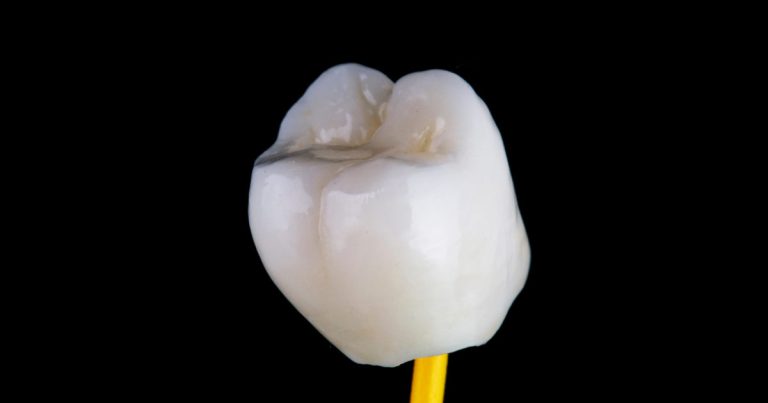
A zirconia crown is a tooth-shaped cap made from zirconium dioxide, a strong ceramic material used in modern dentistry. The crown covers the visible part of a damaged or weakened tooth to restore shape, chewing function, and appearance.
Zirconia crowns are part of the all-ceramic crown family. They are tooth-colored and metal-free, but they are not exactly the same as traditional porcelain crowns. Patients often use the words “porcelain,” “ceramic,” and “zirconia” interchangeably, but dentists use these terms more precisely.
A zirconia crown may be used when a tooth needs:
- Full coverage
- Strength
- A tooth-colored appearance
- Protection from chewing forces
- A metal-free restoration
- A material that can work well in back-tooth areas
- A crown that resists chipping better than some layered porcelain designs
Is Zirconia the Same as Porcelain?
Not exactly.
Zirconia is a ceramic material. Porcelain is also a ceramic material. In everyday dental conversations, many people use “porcelain crown” to mean any white crown, including zirconia. But technically, zirconia and traditional porcelain are different materials.
A simple way to think about it:
- Porcelain often refers to more glass-like tooth-colored ceramics used for esthetics.
- Zirconia is a stronger ceramic material used when durability is especially important.
- Both can be tooth-colored.
- Both can be part of the larger ceramic crown category.
- They do not look, behave, or function exactly the same.
This distinction matters because a patient may be told they are getting a “porcelain/ceramic crown” for insurance or billing purposes, while the actual material used may be zirconia.
Is Zirconia Metal-Free?
Yes, zirconia crowns are generally considered metal-free dental crowns. Zirconia is a ceramic material, not a metal crown.
This can be appealing for patients who want to avoid metal-based crowns, have esthetic concerns about metal margins, or have a history of sensitivity to certain dental alloys.
However, “metal-free” should not be confused with “automatically better.” Some metal and porcelain-fused-to-metal crowns still have valid uses in dentistry. The best material depends on the tooth, bite, esthetic demands, and long-term prognosis.
What Does “Monolithic Zirconia” Mean?
Monolithic zirconia means the crown is made from one solid piece of zirconia.
This matters because some older tooth-colored crowns had a strong inner layer with porcelain layered on top. The porcelain layer could chip away under certain forces. A monolithic zirconia crown has no separate porcelain veneer layer, so there is no outer porcelain layer to chip off in the same way.
Monolithic zirconia is often discussed for:
- Molars
- Premolars
- Heavy bite forces
- Patients who grind or clench
- Patients who have broken previous crowns
- Situations where durability matters more than maximum translucency
This does not mean monolithic zirconia is impossible to damage. It can still fracture, loosen, wear, or fail if the tooth, bite, gum health, or fit is not favorable.
What Is Layered Zirconia?
Layered zirconia has a zirconia core with esthetic porcelain layered over it. The goal is to improve appearance, especially in visible areas, while still using zirconia for support.
Layered zirconia may look more natural than some opaque monolithic zirconia crowns, but it can introduce a different risk: the outer porcelain layer may chip.
A dentist may consider layered zirconia when esthetics matter more, especially for front teeth or smile-zone restorations. The tradeoff is that a layered design may not be as chip-resistant as a one-piece monolithic crown in high-force situations.
What Are High-Translucency Zirconia Crowns?
High-translucency zirconia crowns are newer zirconia materials designed to look more natural than older, more opaque zirconia.
Translucency means how light passes through the crown. Natural enamel has a certain depth and light behavior. A crown that is too opaque can look flat, chalky, or artificial, especially on front teeth.
More translucent zirconia may help with esthetics, but there is a tradeoff. In general, as zirconia becomes more translucent, it may give up some strength compared with older high-strength zirconia. That does not mean high-translucency zirconia is weak. It means the dentist and lab must choose the material based on the case.
What Do 3Y, 4Y, and 5Y Zirconia Mean?
Patients may occasionally see terms like 3Y, 4Y, or 5Y zirconia online. These terms refer to how the zirconia material is stabilized and how its crystal structure affects strength and translucency.
You do not need to memorize these labels. The practical patient takeaway is:
- Some zirconias are optimized more for strength.
- Some are optimized more for natural appearance.
- Some try to balance both.
- The stronger, more opaque zirconia may be better for a high-force back tooth.
- The more translucent zirconia may be better for selected visible teeth.
The dentist and lab choose the material based on the tooth, bite, color, space, and long-term goals.
Why Zirconia Crowns Matter
Zirconia crowns matter because they give dentists a strong tooth-colored option for teeth that need serious protection.
For many years, patients often had to choose between very strong metal crowns and more esthetic but potentially less durable tooth-colored crowns. Zirconia helped change that conversation by offering a crown material that can be both strong and tooth-colored.
Zirconia crowns may help:
- Restore broken or cracked teeth
- Protect teeth with large fillings
- Restore back teeth under heavy chewing forces
- Protect selected root-canal-treated teeth
- Offer a metal-free option
- Reduce chipping risk compared with some layered porcelain designs
- Provide a tooth-colored result in areas where strength matters
- Support long-term restorative planning
This is why zirconia often comes up for molars, grinders, large restorations, and patients who have already broken dental work.
At the same time, zirconia should not be promoted as a miracle material. A zirconia crown still depends on a healthy foundation. The tooth underneath can still decay. The bite can still overload the crown. Gum disease can still affect tooth support. A poorly fitted or poorly adjusted crown can still cause problems.
Zirconia is strong, but it is not indestructible.
Who Might Need a Zirconia Crown?
A dentist may recommend a zirconia crown when a tooth needs full coverage and strength is a major concern.
Common situations include:
- A molar with a large cavity
- A tooth with a large old filling
- A cracked tooth that is still restorable
- A broken cusp
- A tooth worn down by grinding
- A root-canal-treated back tooth
- A patient who has broken previous crowns
- A tooth that needs a strong tooth-colored restoration
- A patient who prefers a metal-free option
- A crown on a dental implant in selected cases
A zirconia crown may be especially attractive when the tooth is in a high-load area but the patient still wants a tooth-colored restoration.
Is Zirconia Best for Molars?
Zirconia is often a strong choice for molars, but “best” depends on the case.
Molars handle heavy chewing forces. A crown on a molar must be strong, fit well, and tolerate the patient’s bite. Monolithic zirconia is often considered for molars because it is strong and does not have a separate porcelain layer that can chip off.
A dentist may recommend zirconia for a molar if:
- The bite force is high
- The patient grinds or clenches
- There is limited space for the crown
- A tooth-colored result is desired
- A previous crown chipped or fractured
- The tooth has had root canal treatment
- The patient wants to avoid metal
However, zirconia is not the only molar crown material. Some patients may still be good candidates for metal crowns, porcelain-fused-to-metal crowns, or other ceramic materials depending on the circumstances.
Can Zirconia Be Used for Front Teeth?
Yes, zirconia can be used for front teeth in selected cases, especially with newer, more translucent zirconia materials.
However, front teeth are more esthetically demanding than back teeth. A front crown must match natural teeth in color, brightness, translucency, surface texture, shape, and gumline appearance. For a single front tooth, the challenge is even greater because the crown sits beside natural teeth.
A dentist may consider zirconia for a front tooth when strength, masking a dark underlying tooth, or a metal-free option matters. In other cases, lithium disilicate or another ceramic may be recommended for a more enamel-like appearance.
This is one area where material selection is highly case-dependent.
Is Zirconia Good for People Who Grind Their Teeth?
Zirconia is often considered for patients who grind or clench because of its strength. A monolithic zirconia crown may be less likely to chip than a crown with layered porcelain.
However, zirconia does not stop grinding. If you grind or clench, you may still need a nightguard, bite evaluation, or other protective planning.
A patient who grinds heavily can still:
- Crack teeth
- Break restorations
- Wear opposing teeth
- Loosen crowns
- Develop jaw soreness
- Damage dental work over time
Zirconia may be a strong material choice, but it is not a cure for bruxism.
Can a Root-Canal-Treated Tooth Get a Zirconia Crown?
Yes. Zirconia crowns are commonly discussed for root-canal-treated teeth, especially back teeth.
Root canal treatment treats the inside of the tooth. It does not automatically restore the outside strength of the tooth. Many root-canal-treated molars and premolars need a crown to protect them from fracture and leakage.
A zirconia crown may be considered when the tooth needs strength, full coverage, and a tooth-colored result.
The tooth may also need a core buildup or post-and-core before the crown, depending on how much tooth structure remains.
Can Zirconia Help a Cracked Tooth?
A zirconia crown may be recommended for some cracked teeth if the tooth is still restorable and the crack pattern can be managed with full coverage.
A crown can help hold the tooth together and protect it from chewing forces. But a crown cannot fix every crack. If a crack extends down the root or far below the gumline, extraction may be recommended instead.
A cracked tooth should be evaluated carefully before any crown material is chosen.
Who May Need a Different Crown Material or Treatment?
Zirconia is useful, but it is not right for every situation.
A dentist may recommend another option if:
- The tooth can be restored more conservatively with an onlay or filling
- The tooth is mostly healthy and only needs cosmetic improvement
- A front tooth requires maximum translucency and natural light effects
- The tooth is not restorable
- Gum disease is active and uncontrolled
- The bite or tooth position makes the case unfavorable
- There is not enough tooth structure to support a crown
- A different material is better for the esthetic goal
A more conservative option may be preferable when possible because crown preparation is irreversible. If the tooth does not need full coverage, a filling, onlay, veneer, or bonding may preserve more natural tooth structure.
Signs You Should Talk to a Dentist About a Zirconia Crown
You may want to ask your dentist whether zirconia is an option if you have:
- A cracked back tooth
- A broken molar
- A large filling that keeps breaking
- A tooth that hurts when chewing
- A root-canal-treated molar or premolar
- Heavy tooth wear from grinding
- A previous porcelain crown that chipped
- A desire for a metal-free crown
- A need for a strong tooth-colored crown
- A crown recommendation for a high-force chewing tooth
These signs do not prove you need zirconia. They are reasons to ask what crown materials are appropriate and why.
You should seek dental evaluation promptly if you have:
- Severe tooth pain
- Swelling
- Pus or drainage
- A broken tooth with sharp edges
- A crown that fell off
- A tooth that cannot be used for chewing
- A bite that suddenly feels different
What Causes the Need for a Zirconia Crown?
A zirconia crown is usually recommended because of tooth damage or functional risk, not because the tooth has a “zirconia-specific” problem.
Large Cavities
When decay removes a lot of tooth structure, a filling may not be strong enough. A crown may be needed after the decay is removed to protect the remaining tooth.
If the cavity is very deep, the dentist may also need to evaluate whether the pulp is healthy or whether root canal treatment is needed.
Large or Failing Fillings
A tooth with a very large old filling may eventually weaken. The filling can crack, leak, or place stress on the remaining tooth walls.
At some point, replacing the filling again may be less predictable than covering and protecting the tooth with a crown.
Cracks and Fractures
A cracked or broken tooth may need a crown to stabilize it. Zirconia may be considered when strength is a major concern.
However, the dentist must determine whether the crack is restorable. Some cracks cannot be saved predictably with any crown.
Grinding and Clenching
Bruxism can wear teeth down and break dental work. A patient who grinds may be more likely to need strong crowns, especially on back teeth.
If grinding continues, the crown may need protection with a nightguard.
Root Canal Treatment
A tooth that has had root canal therapy may be weaker because of prior decay, fractures, large fillings, or the access opening made during treatment. Zirconia may be considered when the final restoration needs strength and full coverage.
Tooth Wear or Erosion
Teeth can become short, flattened, or weakened from grinding, acid erosion, or both. Zirconia crowns may be part of a larger plan to rebuild worn teeth, but severe wear cases often require careful bite planning.
What Happens During a Zirconia Crown Consultation?
A zirconia crown consultation should focus on diagnosis first and material second.
The dentist may ask:
- What symptoms are you having?
- Does the tooth hurt when biting?
- Is the tooth sensitive to cold or heat?
- Has the tooth had a root canal?
- Do you grind or clench?
- Have you broken crowns or fillings before?
- Is the tooth visible when you smile?
- Do you prefer metal-free restorations?
- Are you trying to match other dental work?
- What are your cost and insurance concerns?
The dentist may examine the tooth, take X-rays, check the bite, evaluate gum health, and discuss material options.
What the Dentist Checks
Before recommending zirconia, the dentist may evaluate:
- Remaining tooth structure
- Size of the cavity or filling
- Presence of cracks
- Tooth vitality
- Root canal status
- Gum health
- Bone support
- Bite forces
- Grinding or clenching signs
- Available space for crown thickness
- Opposing teeth or restorations
- Esthetic demands
- Whether a buildup or post is needed
- Whether a more conservative restoration is possible
This helps determine whether zirconia is appropriate and what type of zirconia design might make sense.
Will You Need X-Rays?
Often, yes.
X-rays can show decay under old fillings or crowns, bone levels, root condition, infection, and other problems that are not visible during a visual exam.
Dental X-rays should be selected based on need. They are not taken simply because every crown patient needs identical images.
Is CBCT Needed for a Zirconia Crown?
Usually, no.
A CBCT scan is not routine for a straightforward zirconia crown on a natural tooth. It may be considered when there is suspected root fracture, implant planning, endodontic complexity, unusual anatomy, or a problem that standard X-rays cannot explain.
Can You Choose Zirconia Yourself?
You can ask about zirconia, and your preferences matter. But material choice should be a shared decision with the dentist.
Patients may care about:
- Strength
- Appearance
- Metal-free materials
- Cost
- Insurance coverage
- Longevity
- Same-day convenience
- Avoiding repeat breakage
The dentist must also consider clinical details you may not be able to see, such as crown thickness, retention, bite, gum health, and the condition of the tooth underneath.
Types of Zirconia Crowns
Not all zirconia crowns are the same. Understanding the broad categories can help you understand your dentist’s recommendation.
Monolithic Zirconia Crowns
A monolithic zirconia crown is made from one solid piece of zirconia.
Potential advantages:
- High strength
- Good chip resistance
- Useful for molars and premolars
- Often good for heavy-bite situations
- No separate porcelain layer to chip
- Can be useful when space is limited
Potential downsides:
- May look less translucent than some other ceramics
- May not be the most lifelike choice for highly visible front teeth
- Requires careful polishing and bite adjustment
- Still depends on tooth and gum health
- Monolithic zirconia is often a practical choice for back teeth.
Layered Zirconia Crowns
A layered zirconia crown has zirconia underneath with porcelain layered on top for esthetics.
Potential advantages:
- Can look more natural than opaque zirconia
- May be useful in visible areas
- Combines zirconia support with porcelain appearance
- Potential downsides:
- The porcelain layer can chip
- May be less ideal for heavy grinders
- Requires careful design and case selection
Layered zirconia is a compromise between strength and esthetics. It may be chosen when appearance matters more, but it is not automatically better than monolithic zirconia.
High-Translucency Zirconia Crowns
High-translucency zirconia is designed to look more natural by allowing more light transmission.
Potential advantages:
- Better appearance than older opaque zirconia
- More useful in visible areas
- Can reduce the “flat” look some patients worry about
Potential downsides:
- May be lower in strength than traditional high-strength zirconia
- Long-term evidence may be less mature for some newer materials
- Not always ideal for high-force molars or severe grinding
High-translucency zirconia can be a good option in selected cases, but the dentist must balance esthetics with function.
Multilayer Zirconia Crowns
Multilayer zirconia crowns are designed with color and translucency gradients to look more like natural teeth. They may be used when a more natural appearance is desired while still using zirconia.
These can be helpful in esthetic cases, but they are not the same as hand-layered porcelain or every other ceramic material. The final appearance still depends on shade selection, tooth preparation, lab quality, and the underlying tooth color.
Pediatric Zirconia Crowns
Pediatric zirconia crowns are prefabricated tooth-colored crowns used for some baby teeth. These are different from adult custom zirconia crowns.
They may be considered when a child needs full coverage and parents want a tooth-colored option. However, stainless steel crowns remain a common and well-established pediatric crown option, especially for back baby teeth.
Pediatric zirconia crowns may require more tooth reduction than stainless steel crowns and may not be right for every child.
Zirconia Crowns vs Other Crown Materials
Patients often want to know whether zirconia is better than other crown materials. The better question is: better for what?
Zirconia vs Porcelain Crowns
Zirconia is a ceramic material, while “porcelain crown” is a broader patient term that may include several tooth-colored crown types.
Compared with traditional porcelain, zirconia is usually discussed as stronger and more fracture-resistant. Traditional porcelain or other ceramics may be more translucent and lifelike in certain cosmetic cases.
Zirconia may be better when strength is the priority.
Other porcelain-type ceramics may be better when maximum front-tooth esthetics are the priority.
Zirconia vs Lithium Disilicate
Lithium disilicate is another popular all-ceramic material. It is often discussed for visible teeth because of its esthetics and translucency.
Zirconia may be preferred when:
- The tooth is in a high-force area
- The patient grinds
- A stronger ceramic is desired
- The dentist wants a monolithic crown
- The tooth is a molar or premolar
- Lithium disilicate may be preferred when:
- The tooth is highly visible
- Natural translucency is the top concern
- The bite forces are manageable
- The preparation and bonding conditions are favorable
Neither material is universally better. Many dentists choose based on tooth location, bite, esthetic needs, and available tooth structure.
Zirconia vs Porcelain-Fused-to-Metal Crowns
Porcelain-fused-to-metal crowns have a metal base with porcelain layered over it. They have a long history and can still be appropriate.
Zirconia offers a metal-free alternative. It may avoid the dark margin that sometimes appears with older PFM crowns and may be made as a monolithic crown to reduce porcelain chipping risk.
PFM crowns may still be considered in selected cases because they have a long clinical track record and can provide strength.
This is not a simple old-versus-new decision. Both materials can be appropriate.
Zirconia vs Metal Crowns
Full metal crowns are not tooth-colored, but they can be very durable. They may be considered for back teeth where appearance is not a priority.
Zirconia may be preferred when the patient wants strength plus a tooth-colored appearance.
Metal may still be considered when maximum durability, minimal tooth reduction, or a long history of performance is prioritized and esthetics are not important.
Zirconia Crown vs Onlay
An onlay covers part of a tooth, often including one or more cusps. A crown covers the full visible tooth.
An onlay may preserve more natural tooth structure when enough healthy tooth remains.
A zirconia crown may be preferred when the tooth is too damaged, cracked, or weakened for partial coverage.
Ask your dentist whether an onlay is an option before choosing full coverage.
Zirconia Crown vs Veneer
A veneer is mainly cosmetic and usually covers the front surface of a tooth. A crown covers the entire visible tooth and provides more structural support.
A veneer may be better for a mostly healthy front tooth with cosmetic concerns.
A zirconia crown may be better if the tooth is heavily filled, cracked, root-canal-treated, or structurally weak.
Zirconia Crown vs Dental Implant
A zirconia crown on a natural tooth is used to restore a tooth that is still present.
A dental implant replaces a missing tooth root and supports an implant crown.
If the tooth can be predictably saved, a crown may help preserve the natural tooth. If the tooth is not restorable, extraction and implant treatment may be discussed.
What Does the Zirconia Crown Procedure Involve?
The zirconia crown process is similar to other crown procedures, with some material-specific decisions behind the scenes.
Step 1: Diagnosis and Treatment Planning
The dentist confirms whether a crown is needed and whether zirconia is appropriate. They evaluate the tooth, X-rays, bite, gums, symptoms, and esthetic goals.
Step 2: Material Selection
The dentist may choose among:
- Monolithic zirconia
- Layered zirconia
- High-translucency zirconia
- Multilayer zirconia
- Another ceramic material
- PFM or metal crown
The material depends on the tooth location, bite forces, esthetic needs, and remaining tooth structure.
Step 3: Numbing the Tooth
Most crown preparations are done with local anesthetic. You should feel pressure and vibration, not sharp pain.
If you feel pain during the appointment, tell the dental team so they can adjust anesthesia.
Step 4: Removing Decay or Old Restorations
The dentist removes decay, old filling material, weak tooth structure, or a failing old crown. Sometimes the full extent of damage is not clear until the old restoration is removed.
If the tooth is more damaged than expected, the plan may change.
Step 5: Core Buildup or Post if Needed
If much of the tooth is missing, the dentist may place a core buildup to create a foundation for the crown. A root-canal-treated tooth may sometimes need a post and core, depending on how much tooth structure remains.
These procedures may add cost and time.
Step 6: Tooth Preparation
The tooth is reshaped so the crown can fit over it. Zirconia can sometimes allow relatively conservative crown thickness compared with some materials, but the tooth still needs to be meaningfully prepared.
The exact amount of tooth reduction depends on:
- Zirconia type
- Monolithic vs layered design
- Front vs back tooth
- Bite forces
- Tooth damage
- Available space
- Esthetic goals
- Manufacturer recommendations
- Dentist’s clinical judgment
Avoid any source that promises one universal amount of “shaving” for all zirconia crowns.
Step 7: Scan or Impression
The dentist takes a digital scan or physical impression of the prepared tooth and surrounding teeth. This record is used to design the crown so it fits your tooth, contacts neighboring teeth, and works with your bite.
Step 8: Temporary Crown or Same-Day Crown
If the zirconia crown is being made by a lab, you may receive a temporary crown while the final crown is fabricated.
If the office offers same-day CAD/CAM zirconia and the case is appropriate, the crown may be milled and finished in the office during one longer visit.
Same-day treatment depends on the office technology and the specific clinical situation.
Step 9: Try-In
Before final placement, the dentist checks:
- Fit
- Margins
- Contacts
- Bite
- Color
- Shape
- Comfort
- Gumline appearance
If the crown does not fit well or the color is not acceptable in a visible area, it may need adjustment or remake.
Step 10: Cementing or Bonding the Crown
The crown is attached to the tooth with dental cement or bonding materials. Zirconia can be cemented or bonded depending on the case, preparation, and dentist’s protocol.
This is a technique-sensitive decision. Patients do not need to know every chemical step, but they should understand that how the crown is attached depends on the crown material, tooth preparation, and clinical situation.
Step 11: Bite Adjustment and Follow-Up
The dentist checks the bite after the crown is seated. If the crown hits too hard, the tooth may become sore.
Call your dentist if the crown feels high, your bite feels uneven, or the tooth hurts when chewing.
Same-Day Zirconia Crowns vs Lab-Made Zirconia Crowns
Some zirconia crowns are made in a dental laboratory. Others may be made in the dental office with CAD/CAM technology.
Lab-Made Zirconia Crowns
A lab-made crown usually requires at least two visits. The dentist prepares the tooth and places a temporary crown. The lab fabricates the final crown, and you return for placement.
Lab-made crowns may be especially useful when:
- The tooth is highly visible
- A custom shade is needed
- Several crowns must match
- Layering or characterization is important
- The case is complex
- The office does not offer same-day zirconia
Same-Day Zirconia Crowns
Same-day crowns are made with digital scanning, computer design, and milling equipment in the dental office. Some same-day crowns can be completed in a single longer appointment.
Same-day zirconia may be convenient, but it is not right for every case. Some materials require sintering or finishing time, and not every office has the same technology.
Same-day is a workflow, not a guarantee that the crown is better or worse.
Which Is Better?
Neither is always better.
A well-made same-day zirconia crown can be excellent in the right case. A well-made lab zirconia crown can also be excellent. The quality depends on diagnosis, preparation, material choice, design, milling, finishing, fit, polishing, bite adjustment, and maintenance.
How Long Does a Zirconia Crown Take?
The timeline depends on whether the crown is lab-made or same-day.
A traditional lab-made zirconia crown may involve:
- Consultation and X-rays
- Tooth preparation
- Scan or impression
- Temporary crown
- Lab fabrication
- Final try-in
- Cementation or bonding
- Bite adjustment
The lab portion may take days to a few weeks depending on the office and lab.
Same-day zirconia may be completed in one visit if the office has the technology and the case is appropriate.
What Can Make the Process Longer?
Treatment may take longer if:
- The tooth needs a root canal first
- A buildup or post is needed
- Gum treatment is needed
- The tooth is cracked and hard to diagnose
- The esthetic match is demanding
- The bite is complex
- A temporary crown breaks or comes loose
- Insurance preauthorization is requested
- A lab remake is needed
- A specialist is involved
Does Getting a Zirconia Crown Hurt?
The procedure should not hurt when the tooth is properly numb. You may feel pressure, vibration, water, suction, and jaw fatigue.
If the tooth has been painful before the appointment, you may be especially nervous. Tell your dentist if you have had trouble getting numb in the past or if you are anxious about dental work.
What Is Normal After a Zirconia Crown?
After crown preparation or placement, you may have:
- Gum soreness
- Jaw fatigue
- Cold sensitivity
- Pressure awareness
- Mild biting tenderness
- Sensitivity around the temporary crown
- A new feeling when the final crown is first placed
Mild sensitivity can improve over days or a couple of weeks. The crown may also feel different at first because your bite is adjusting to a new surface.
What Pain Is Not Normal?
Call the dentist if:
- Pain is severe
- Pain is worsening
- Pain wakes you at night
- The crown hurts sharply when biting
- The crown feels too high
- The gum is swelling
- You have a bad taste or drainage
- The crown feels loose
- The temporary crown falls off
- You cannot chew on the tooth
A high bite can often be corrected with adjustment. Do not wait too long if the tooth feels overloaded.
Can You Get Sedation for a Zirconia Crown?
Some patients may be able to discuss nitrous oxide, oral sedation, or other comfort options depending on the office, provider training, medical history, and treatment complexity.
Sedation is not required because the crown is zirconia. It may be considered because the patient is anxious, the appointment is long, or other procedures are being done.
Recovery and Aftercare
Zirconia is strong, but aftercare still matters. A crown can only last if the tooth, gums, and bite remain healthy.
What Can You Eat With a Temporary Crown?
If you have a temporary crown, avoid foods that may pull it off or break it.
Be cautious with:
- Sticky candy
- Gum
- Caramels
- Hard nuts
- Ice
- Popcorn kernels
- Very chewy foods
- Hard crusty bread
- Biting hard foods directly on the temporary
- Chew on the opposite side when possible.
If the temporary crown falls off, call your dentist. Do not leave the prepared tooth uncovered.
What Can You Eat After the Final Zirconia Crown?
Once the final crown is cemented or bonded and your numbness has worn off, your dentist may allow you to return gradually to normal chewing.
Still, avoid chewing ice, hard objects, pens, fingernails, or anything that could damage natural teeth or restorations.
If the tooth is sore when biting, do not keep testing it. Call for a bite check.
How Do You Clean Around a Zirconia Crown?
Clean a zirconia crown like a natural tooth.
- Brush twice daily with fluoride toothpaste.
- Clean between teeth daily.
- Floss gently around the crown margins.
- Use interdental brushes or floss threaders if recommended.
- Keep regular dental cleanings.
- Tell your dentist if floss catches or shreds.
The crown material cannot get a cavity, but the tooth at the crown margin can.
Do You Need a Nightguard With a Zirconia Crown?
You may, especially if you grind or clench.
Zirconia is strong, but grinding can still damage teeth, opposing restorations, and the bite. A nightguard may help protect the crown and surrounding teeth.
Ask your dentist whether a nightguard is recommended, especially if you have:
- Flattened teeth
- Jaw soreness
- Cracked teeth
- Broken fillings
- A history of broken crowns
- Morning headaches
- A partner who hears grinding
How Often Should Zirconia Crowns Be Checked?
Zirconia crowns should be checked during routine dental visits. Many patients are seen every six months, but some need more frequent maintenance depending on gum disease, cavity risk, dry mouth, bruxism, or complex dental work.
At visits, the dental team may check:
- Crown margins
- Gum inflammation
- Bite contacts
- Chipping or roughness
- Cement integrity
- Decay risk
- Flossing access
- X-rays when needed
How Long Do Zirconia Crowns Last?
Zirconia crowns can last many years, but they are not permanent in the sense of lasting forever.
Longevity depends on:
- Zirconia type
- Monolithic vs layered design
- Tooth location
- Bite force
- Grinding or clenching
- Crown fit
- Tooth preparation
- Cementation or bonding
- Oral hygiene
- Cavity risk
- Gum health
- Dry mouth
- Regular dental care
- Diet and habits
Studies generally show strong short- and medium-term survival for zirconia crowns, but exact numbers vary by study, crown design, tooth position, and follow-up length. [EXTERNAL SOURCE NEEDED: systematic review/meta-analysis on zirconia single crown survival and failure rates]
A helpful expectation is that zirconia crowns can be long-lasting when properly planned, fitted, polished, and maintained, but they can still need repair or replacement.
What Helps a Zirconia Crown Last Longer?
You can help protect a zirconia crown by:
- Brushing and flossing consistently
- Keeping dental visits
- Using fluoride toothpaste
- Managing dry mouth
- Wearing a nightguard if recommended
- Avoiding ice and hard-object chewing
- Treating gum disease
- Calling if the bite feels high
- Calling if the crown feels loose
Replacing old failing dental work before it causes bigger problems
Why Zirconia Crowns Fail
Zirconia crowns may fail because of:
- Decay at the margin
- Crown loosening
- Loss of cement or bond
- High bite
- Grinding forces
- Cracked tooth underneath
- Root fracture
- Gum disease
- Poor oral hygiene
- Crown fracture
- Layered porcelain chipping
- Inadequate tooth support
A zirconia crown failure is not always a material failure. Sometimes the tooth under the crown or the supporting tissues are the problem.
Risks, Downsides, and Limitations
Zirconia crowns have many advantages, but patients should understand their limits.
Tooth Preparation Is Irreversible
A crown requires reshaping the tooth. Once a tooth is prepared for a crown, it will need a crown or similar restoration going forward.
This is why conservative options should be considered when they can solve the problem predictably.
Zirconia Can Still Break
Zirconia is strong, but not unbreakable. A crown can crack, fracture, loosen, or fail under severe forces or unfavorable conditions.
Layered zirconia may also chip if the porcelain layer is stressed.
The Tooth Underneath Can Still Decay
This is one of the biggest misconceptions about crowns.
Zirconia does not get cavities, but the natural tooth at the edge of the crown can. If plaque collects around the margin, recurrent decay can develop underneath or beside the crown.
Zirconia May Not Be the Most Natural-Looking Choice for Every Front Tooth
Newer zirconia can look very good, but lithium disilicate or other ceramics may still be preferred in some high-esthetic front-tooth cases.
This is especially true when one crown must match natural teeth beside it.
Opposing Tooth Wear Depends on Surface and Bite
Patients sometimes worry that zirconia will wear down the tooth that bites against it.
The most balanced explanation is that zirconia is not automatically destructive, but surface finish matters. A properly polished and adjusted zirconia crown is different from a rough, poorly adjusted, or heavily overloaded one.
Bite management and polishing after adjustments are important.
The Crown Can Feel High
If the crown contacts too soon when you bite, the tooth may become sore. A high bite is not something to ignore.
A dentist can often adjust the crown surface to improve the bite.
The Tooth May Still Need Root Canal Treatment Later
Some crowned teeth later need root canal therapy, especially if the tooth was already deeply decayed, cracked, heavily restored, or inflamed.
A crown can protect the tooth structure, but it cannot guarantee that the nerve inside the tooth will never develop a problem.
Cost and Insurance
Zirconia crown cost can be hard to quote because many public fee schedules and insurance systems group zirconia under broader porcelain or ceramic crown categories.
That means a posted “ceramic crown” or “porcelain crown” fee may include zirconia in some settings, but it may not tell you exactly which material or lab process is being used.
What Affects Zirconia Crown Cost?
Cost may depend on:
- Tooth location
- Crown material and zirconia type
- Lab-made vs same-day workflow
- Need for a temporary crown
- Need for core buildup
- Need for post and core
- Need for root canal treatment
- Need for gum treatment
- Whether the crown is on a natural tooth or implant
- Custom shade work
- Dental lab fees
- Dentist’s fees
- Geographic region
- Insurance network status
- Whether the crown is medically necessary or cosmetic
How Much Does a Zirconia Crown Cost?
There is no single reliable national zirconia crown price.
Consumer sources often place permanent crowns broadly in the range of roughly one to two thousand dollars or more, but exact fees vary widely and may not isolate zirconia from other ceramic crowns.
The best way to get a meaningful number is to ask for a written estimate from your dental office that explains what is included.
What Should the Estimate Include?
Ask whether the estimate includes:
- Exam
- X-rays
- Core buildup
- Post and core
- Temporary crown
- Final zirconia crown
- Lab fees
- Digital scan
- Sedation, if used
- Root canal treatment, if needed
- Crown lengthening, if needed
- Follow-up adjustments
- Nightguard, if recommended
A crown quote may not include all related procedures. This is one reason patients are surprised by final costs.
Does Insurance Cover Zirconia Crowns?
Dental insurance may cover crowns when they are medically necessary, but coverage varies.
Crowns are often considered a major service. Your plan may have:
- Deductible
- Annual maximum
- Waiting period
- Frequency limit
- Replacement restrictions
- Network rules
- Alternate benefit rules
- Coverage limits for certain materials
- Separate rules for buildups or posts
Some plans may cover a porcelain/ceramic crown code, while others may pay only up to a less expensive alternative. Some plans may treat certain esthetic materials on back teeth differently.
Ask your dental office or insurer:
- What code will be submitted?
- Is zirconia included under porcelain/ceramic coverage?
- Is there a waiting period?
- Is there a frequency limit on this tooth?
- Is a buildup covered?
- Is a post and core covered?
- Will the plan downgrade to a different material allowance?
- Can we submit a pre-treatment estimate?
Is Zirconia Worth the Cost?
Zirconia may be worth the cost when its strengths match the clinical need.
It may offer strong value if:
- The tooth is in a high-force area
- The patient wants a tooth-colored crown
- A previous crown chipped
- The patient grinds or clenches
- A metal-free option is desired
- Durability is a high priority
It may not be the best value if:
- A smaller restoration would work
- A front tooth needs maximum translucency
- The tooth cannot be restored predictably
- The patient is choosing zirconia only because it sounds premium
- The long-term prognosis is poor
Value is not just material price. It is whether the restoration fits the tooth, bite, and patient’s goals.
Special Situations
Zirconia Crowns for Children
Children can receive zirconia crowns in selected cases, but pediatric zirconia crowns are different from adult custom zirconia crowns.
For baby teeth, stainless steel crowns are still common and have a long track record. Zirconia pediatric crowns may be chosen when a tooth-colored option is important, especially for visible teeth or parent preference.
However, pediatric zirconia crowns may require more tooth reduction and may not be ideal in every situation. Parents should ask the pediatric dentist why zirconia is being recommended instead of stainless steel, resin, or another option.
Zirconia Crowns for Older Adults
Older adults may be good candidates for zirconia crowns, but planning should account for:
- Dry mouth
- Gum recession
- Root cavities
- Existing crowns and bridges
- Medication effects
- Bruxism
- Difficulty cleaning
- Partial dentures
- Bone support
A strong crown material does not eliminate the need for cavity prevention. Dry mouth and gum recession can make crown margins more vulnerable.
Zirconia Crowns During Pregnancy
Pregnancy does not automatically prevent necessary dental treatment. If a tooth is broken, painful, or decayed, dental care may be needed.
Tell your dentist if you are pregnant. The dental team can discuss timing, X-rays when necessary, local anesthetic, and coordination with your medical provider when appropriate.
Purely elective cosmetic crown treatment may sometimes be delayed, but urgent dental problems should not be ignored.
Zirconia Crowns and Gum Disease
Gum health matters for any crown.
If gum disease is active, the dentist may recommend periodontal treatment before placing a final crown. A crown placed on a tooth with poor support may have a weaker long-term prognosis, no matter how strong the material is.
Zirconia Crowns and Diabetes
Diabetes may affect gum health, infection risk, and healing. It does not automatically prevent crown treatment, but it should be part of your dental history.
Tell your dentist if you have diabetes, especially if blood sugar control is difficult or you have a history of gum disease.
Zirconia Crowns and Dental Anxiety
If you are anxious about crown treatment, tell the office before the appointment.
The dentist may be able to explain the steps, use effective numbing, offer breaks, use digital scans instead of traditional impressions, discuss nitrous oxide or sedation, or adjust the appointment plan.
Zirconia itself does not make the procedure more painful than other crown materials. The anxiety is usually about tooth preparation, injections, time in the chair, cost, or fear of bad news.
Common Misconceptions About Zirconia Crowns
Myth: Zirconia Is Always the Best Crown Material
Zirconia is excellent in many cases, but it is not always best. The right material depends on tooth location, bite forces, esthetic demands, gum health, and remaining tooth structure.
Myth: Zirconia Crowns Are Indestructible
Zirconia is strong, but it can still break, loosen, or fail. The tooth underneath can also crack or decay.
Myth: Zirconia Always Looks Fake
Older zirconia could look more opaque in some cases. Newer zirconia materials can look more natural. Still, for some highly visible front teeth, another ceramic may be preferred.
Myth: Zirconia Never Wears Opposing Teeth
Surface finish and bite matter. Proper polishing and adjustment are important. Avoid blanket claims either way.
Myth: Zirconia Requires Almost No Tooth Reduction
Zirconia can sometimes allow conservative preparation, but every crown requires tooth reshaping. The amount depends on the case and material type.
Myth: More Expensive Means Better for Everyone
A more expensive material is not automatically better. The best crown is the one that fits the clinical situation and is maintained well.
Myth: Metal-Free Means Risk-Free
Metal-free crowns can be appropriate and appealing, but they still have risks. Fit, bite, decay prevention, gum health, and material selection still matter.
When Should You Call a Dentist After a Zirconia Crown?
Call your dentist if:
- The bite feels high
- The crown hurts when biting
- The crown feels loose
- A temporary crown falls off
- The crown chips or cracks
- The crown feels sharp
- Sensitivity is worsening
- Pain wakes you at night
- The gum around the crown swells
- You notice pus, drainage, or bad taste
- Food traps around the crown
- Floss shreds or gets stuck
- The crown looks or feels wrong
Do not keep chewing on a crown that feels high or painful. A bite adjustment may be simple, but waiting can irritate the tooth.
When Is It Urgent?
Seek prompt dental care for:
- Severe tooth pain
- Facial swelling
- Fever with dental symptoms
- Pus or drainage
- A broken tooth
- A loose or fallen crown on a painful tooth
- Trauma to the mouth
- Trouble opening normally
Seek urgent medical care if swelling affects breathing or swallowing.
Questions to Ask Before Choosing a Zirconia Crown
Before moving forward, ask your dentist:
- Why are you recommending zirconia for this tooth?
- Is this a front tooth, back tooth, or high-bite-force case?
- Are you recommending monolithic or layered zirconia?
- Is high-translucency zirconia needed for appearance?
- Would lithium disilicate, PFM, metal, or another material be appropriate?
- Is an onlay or filling still an option?
- Is the tooth restorable?
- Do I need a root canal first?
- Do I need a buildup or post?
- How much tooth structure is left?
- Will this be same-day or lab-made?
- Will I need a temporary crown?
- How will the shade be matched?
- How will the bite be checked?
- Do I need a nightguard?
- What could cause this crown to fail?
- How long do you expect it to last in my case?
- What is the total cost?
- What does insurance usually cover?
- Could the plan downgrade benefits to a different material?
- What should I do if it feels high or painful afterward?
These questions help make the decision more specific than “zirconia or not.” They focus on whether zirconia is the right choice for your tooth.
How to Choose a Dentist for a Zirconia Crown
Many general dentists provide zirconia crowns. Complex cases may benefit from a prosthodontist, endodontist, periodontist, oral surgeon, or coordinated care depending on the problem.
You may want a more detailed discussion or second opinion if:
- The crown is on a front tooth
- You need one crown to match natural teeth
- You grind heavily
- The tooth may not be restorable
- The tooth has had a root canal
- A post and core is recommended
- Several crowns are being planned
- You have gum disease
- You have had repeated crown failures
- You are choosing between crown and implant
- You are unsure about material cost or insurance coverage
Look for a dentist who explains why zirconia fits your case and also discusses reasonable alternatives.
Final Thoughts
Zirconia crowns are strong, tooth-colored, metal-free restorations that can be an excellent choice for many damaged, cracked, heavily filled, worn, or root-canal-treated teeth. They are especially useful when strength and durability matter, such as on molars or in patients with heavy bite forces.
But zirconia is not a universal answer. It comes in different types, including monolithic, layered, and high-translucency versions. Some are optimized for strength. Others are designed to look more natural. A back molar, front tooth, implant crown, pediatric crown, and bruxism case may all require different planning.
The best zirconia crown is not simply the strongest crown or the most expensive crown. It is the crown that fits your tooth, bite, esthetic goals, oral health, and long-term maintenance needs.
If your dentist recommends a zirconia crown, ask why zirconia is being chosen, what alternatives exist, whether the crown will be monolithic or layered, how your bite will be managed, what the total cost includes, and how to protect the crown after placement.
Zirconia can be a powerful tool in modern restorative dentistry. Like any dental treatment, it works best when it is chosen for the right reason and maintained carefully.