Inlays and Onlays

IF YOU HAVE A DAMAGED TOOTH, WHETHER IT’S CRACKED, CHIPPED, OR DAMAGED FROM TOOTH DECAY, SOMETIMES YOUR DENTIST WILL RECOMMEND A DENTAL INLAY OR ONLAY.


Inlays and onlays are used when a tooth cannot be repaired with a filling but the damage is not serious enough for a dental crown. Dental inlays and onlays are used to protect a damaged tooth and allow it to function normally.

The difference between an inlay and onlay is where they are placed. A dental inlay will be placed in the center of the tooth, and a dental onlay will be placed on one or more areas of the bitting surface of the tooth. Dental onlays may also be referred to as “partial crowns.”

A dental inlay or onlay procedure can usually be completed in one or two visits.

Step 1: Preparing the Tooth

Your dentist will begin by preparing your tooth for the inlay or onlay. This includes removing the damaged area of the tooth and filing down the specific areas of your tooth that will be receiving the inlay or onlay.

Step 2: Impressions

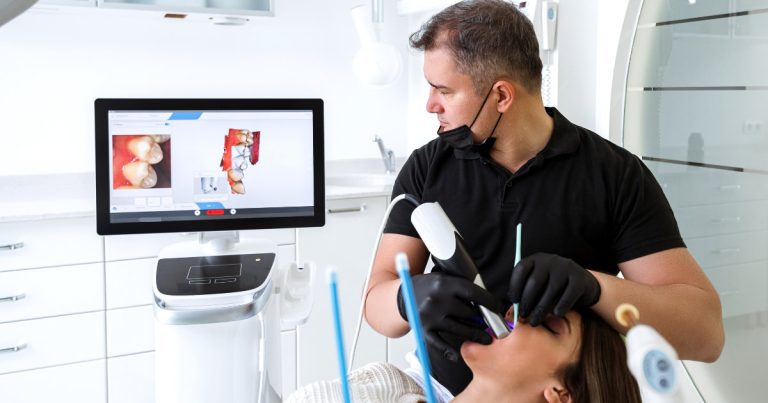
Next, your dentist will need to make impressions of the tooth to ensure a proper fit. The inlay or onlay can either be made in a lab or sometimes the dentist can make them in their office.

Step 3: Permanent Inlay or Onlay

If your dentist can make the inlay or onlay in their office, they will be able to get your permanent one ready on the same day. If they send your impressions to a lab, you will receive a temporary one while you wait for the lab to create the permanent one.

When your dentist has the final inlay or onlay created they will remove the temporary one, if necessary, and place the permanent one on your tooth with a strong bonding agent.

Step 4: Adjustments

Once the permanent inlay or onlay is placed, the dentist will make any adjustments to be sure it is comfortable.

Your dentist can offer you local anesthesia during this procedure as some irritation may occur when the dentist is preparing the tooth for the dental inlay or onlay. You and your dentist will also discuss the type of material you would like to use. There are three types of materials that can be used, including:

  • Composites
  • Metal
  • Porcelain

Your dentist will be able to tell you which material best fits your needs. Following your procedure, your tooth may be more sensitive to hot and cold foods and beverages for a few days and you may experience gum tenderness. If this last for more than a couple weeks, it is important to contact your dentist.

Related Post

Laser Sleep Apnea Treatment

Laser Treatment for Sleep Apnea: A CPAP Alternative?

What Is Laser Treatment for Sleep Apnea? Laser treatment for sleep apnea refers to procedures that use focused laser energy to modify or strengthen soft tissues in the oral airway, aiming to reduce obstruction during sleep. There are two main categories: Laser-Assisted Uvulopalatoplasty (LAUP): A surgical approach where lasers remove or reshape portions of the soft palate and uvula. Non-Ablative Laser Therapy (e.g., NightLase®): A non-surgical, in-office treatment that uses laser energy to heat and tighten oral tissues without cutting.   These options are designed for patients seeking alternatives to Continuous Positive Airway Pressure (CPAP) therapy, especially those with

Read More »
CEREC Same-Day Crown

CEREC Same-Day Crown

Modern dental technology has introduced convenient options like CEREC same-day crowns for restoring damaged teeth. Unlike traditional crowns that require multiple visits and temporary crowns, a CEREC crown is designed, milled, and placed in a single appointment. In this comprehensive guide, we’ll explain what CEREC crowns are, who might need one, how the procedure works, and what to expect before, during, and after treatment. We’ll also cover the benefits, potential drawbacks, alternatives, costs, and address common misconceptions about same-day crowns.   What Are CEREC Same-Day Crowns? A dental crown is a custom-made “cap” that covers a damaged or weakened

Read More »

Related Post

Laser Sleep Apnea Treatment
cem

Laser Treatment for Sleep Apnea: A CPAP Alternative?

What Is Laser Treatment for Sleep Apnea? Laser treatment for sleep apnea refers to procedures that use focused laser energy to modify or strengthen soft tissues in the oral airway, aiming to reduce obstruction during sleep. There are two main categories: Laser-Assisted Uvulopalatoplasty (LAUP): A surgical approach where lasers remove or reshape portions of the soft palate and uvula. Non-Ablative Laser Therapy (e.g., NightLase®): A non-surgical, in-office treatment that uses laser energy to heat and tighten oral tissues without cutting.   These options are designed for patients seeking alternatives to Continuous Positive Airway Pressure (CPAP) therapy, especially those with

Read More »
CEREC Same-Day Crown
cem

CEREC Same-Day Crown

Modern dental technology has introduced convenient options like CEREC same-day crowns for restoring damaged teeth. Unlike traditional crowns that require multiple visits and temporary crowns, a CEREC crown is designed, milled, and placed in a single appointment. In this comprehensive guide, we’ll explain what CEREC crowns are, who might need one, how the procedure works, and what to expect before, during, and after treatment. We’ll also cover the benefits, potential drawbacks, alternatives, costs, and address common misconceptions about same-day crowns.   What Are CEREC Same-Day Crowns? A dental crown is a custom-made “cap” that covers a damaged or weakened

Read More »
Skip to content