What Is Laser Treatment for Sleep Apnea?
Laser treatment for sleep apnea refers to procedures that use focused laser energy to modify or strengthen soft tissues in the oral airway, aiming to reduce obstruction during sleep. There are two main categories:
- Laser-Assisted Uvulopalatoplasty (LAUP): A surgical approach where lasers remove or reshape portions of the soft palate and uvula.
- Non-Ablative Laser Therapy (e.g., NightLase®): A non-surgical, in-office treatment that uses laser energy to heat and tighten oral tissues without cutting.
These options are designed for patients seeking alternatives to Continuous Positive Airway Pressure (CPAP) therapy, especially those with snoring or mild obstructive sleep apnea (OSA).
Who Might Benefit from Laser Therapy?
Laser treatments may benefit:
- Adults with mild to moderate OSA or chronic snoring.
- Patients who are CPAP-intolerant.
- Those with anatomical obstruction primarily at the level of the soft palate.
- Individuals seeking a non-invasive or minimally invasive option.
Patients with severe OSA or collapse at multiple airway levels may not achieve sufficient benefit from laser therapy alone.
Common Signs You May Need Treatment
If you experience any of the following, a sleep apnea evaluation may be needed:
- Loud, persistent snoring
- Daytime sleepiness or fatigue
- Morning headaches
- Gasping or choking during sleep
- Trouble concentrating or memory issues
A sleep study is typically required to confirm OSA and determine severity.
What Happens During a Consultation for Laser Therapy?
During your consultation, a dentist or sleep specialist will:
- Review your medical history and sleep symptoms
- Examine your oral anatomy
- Possibly refer you for a sleep study (if one hasn’t been done)
- Discuss whether laser treatment is appropriate for your case
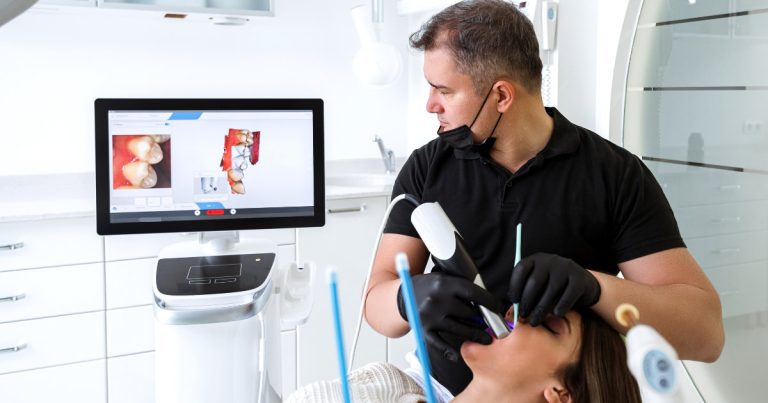
Some providers use 3D airway scans or imaging to assess soft tissue obstruction.
What Does the Laser Treatment Process Involve?
For NightLase® (Non-Ablative Laser Therapy):
- Laser energy is applied to the soft palate, uvula, and surrounding tissues.
- Sessions are painless and require no anesthesia.
- Treatment involves 3 to 4 sessions spaced over 6 to 8 weeks.
- Each session lasts around 15–30 minutes.
- Tissue tightening and collagen remodeling occur over time, improving airway openness.
For LAUP (Laser-Assisted Uvulopalatoplasty):
- A laser is used to cut or vaporize parts of the soft palate and/or uvula.
- Typically performed under local anesthesia in-office or outpatient setting.
- May require multiple sessions for full effect.
How Long Does Treatment Take?
- NightLase: Full protocol spans 1 to 2 months, with each session under 30 minutes.
- LAUP: Procedure time varies but usually under 1 hour; recovery is longer due to healing.
Pain Management and Comfort
- NightLase: No anesthesia needed; patients report mild warmth or tingling.
- LAUP: Local anesthesia is used; post-procedure discomfort is common (similar to sore throat).
What Is the Recovery Process Like?
- NightLase: No downtime; normal activities can resume immediately. Occasional dry throat or mild irritation for a day.
- LAUP: Healing may take 1–2 weeks; patients may experience pain, swallowing difficulty, or voice changes during recovery.
Aftercare Instructions
- Stay hydrated and avoid irritants (e.g., smoking, alcohol) during healing.
- For NightLase, maintain a healthy weight and avoid late-night alcohol/sedatives.
- Follow your provider’s instructions on sleep position or mouth hygiene.
When to Call Your Dentist or Provider
- Persistent or worsening throat pain after LAUP
- New swallowing or speech issues
- Signs of infection (fever, pus, excessive swelling)
- Return or worsening of symptoms after laser therapy
Follow-Up Appointments
- NightLase often includes a reassessment after the third or fourth session.
- Touch-up treatments may be recommended annually or as needed.
- LAUP follow-ups monitor healing and treatment success.
Benefits of Laser Therapy for Sleep Apnea
- Non-invasive (NightLase) or minimally invasive (LAUP)
- No nightly equipment required
- Improved snoring in most patients
- Good patient tolerance
- Office-based treatments with short sessions
- Repeatable as needed (especially NightLase)
Risks and Limitations
- LAUP may worsen OSA in some cases due to scarring
- Not suitable for all types or severities of apnea
- Results may wane over time, especially with NightLase
- Multiple treatments may be needed
- LAUP may cause long-term changes in swallowing or voice
Are There Alternatives to Laser Therapy?
- CPAP machines (most effective but may lack comfort)
- Oral appliances (custom-fitted mouthguards)
- Weight loss and lifestyle changes
- Surgical options like UPPP or jaw advancement
- Nerve stimulators (e.g., Inspire®)
Some patients combine laser therapy with oral appliances or positional therapy for better results.
How Much Does Laser Treatment Usually Cost?
- NightLase typically costs between $1,200 and $3,000 for the full treatment series.
- LAUP costs vary by provider and region, often between $1,500 and $4,000.
- These treatments are usually not covered by insurance.
- Many providers offer payment plans or financing options.
Common Misconceptions
- “Laser treatment cures all sleep apnea.”
- Not true. NightLase may help mild or moderate cases but is not a universal cure.
- “It’s painful or involves burning.”
- Non-ablative lasers do not burn tissue. They gently heat it to induce tightening.
- “Only surgery works for OSA.”
- Many non-surgical treatments, including laser therapy, show benefits in selected patients.
- “If it doesn’t work right away, it’s a failure.”
- Tissue remodeling takes weeks. Improvements often peak a few weeks after the final session.
Final Thoughts
Laser treatment offers an exciting alternative for individuals struggling with snoring or CPAP intolerance. For the right patient–particularly those with mild to moderate OSA–it may offer meaningful relief. While not a guaranteed cure, it can improve sleep quality and reduce reliance on nightly machines. If you’re curious whether laser therapy could be right for you, speak with your dentist or a sleep specialist about an evaluation and treatment plan.