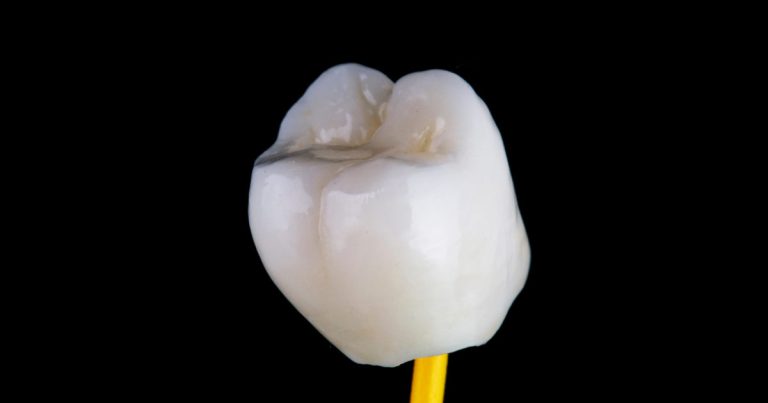
Bruised Tooth

What is a bruised tooth?

While most people are familiar with bruises, it may be strange to consider the idea that a tooth can be bruised. However, your teeth have connective tissues and ligaments that hold them in place and cushion them against the kinds of forces they are subjected to during regular use. On an occasion when a tooth has been put under too much pressure or has experienced trauma, these tissues can become damaged or inflamed. This is known as a bruised tooth or sprained tooth syndrome.

Much like a bodily bruise, a bruised tooth can happen from an injury. This can be the result of a sports injury, a blow to the mouth, or things like biting down on a hard object or tooth grinding. The surrounding connective tissue will attempt to absorb the impact, but the capillaries around the tooth will burst, leading to discoloration—much as with any other type of bruise. Some degree of pain in the area may result as well.

The discoloration of a bruised tooth is usually a shade that varies between pink and gray. This color may be an indicator of the amount of damage the tooth has sustained. The pink color typically indicates that the tooth is in a stage where it is attempting to protect the nerve, though it can also be a sign of problems with the root of the tooth, so it is not safe to make an assumption based on color alone. The gray shade is a more likely indicator that the pulp of the tooth is dying, and there is a risk of decay or infection.

In all cases, you should contact the dentist to have an examination.

Symptoms of a bruised tooth

The first symptom you may notice with a bruised or sprained tooth is a dull, achy pain in the general area, similar to a sprained ligament. Alternatively, the pain may be located specifically in the affected tooth, where it may be a sharper type of pain.

The tooth may become discolored—turning somewhere between pink and gray, as mentioned above—and the surrounding gums could become sensitive and inflamed.

It may be difficult to distinguish the pain of a bruised tooth from toothache resulting from infection or tooth decay, so we recommend having your tooth looked at by the dentist.

How is a bruised tooth treated?

Whenever a tooth is showing signs of trauma, it is best to make an appointment to have it examined. X-rays will likely be taken to assess damage that might not be visible, and your mouth will be checked for loose teeth, sensitivity, or hidden problems like an abscess. Treatment will vary depending on the diagnosis. In cases where the bruised tooth is the result of teeth grinding, it may be recommended that you wear a nightguard to protect your teeth and ligaments from further damage. Mouthguards for sports are always recommended to protect teeth.

In many other cases, recovery for a bruised tooth will simply come down to giving the tooth time to heal. Over-the-counter modifications such as acetaminophen or ibuprofen can help with the pain from inflammation, and you should avoid further strain on the area if at all possible. Make sure you follow the treatment plan provided by the dentist to make sure your recovery goes as smoothly as possible.

Links:
Tooth discoloration – pink to gray
https://www.mouthhealthy.org/en/what-dental-issues-look-like

Related Post

Ceramic Braces
Ceramic Braces

Ceramic Braces

What Are Ceramic Braces? Ceramic braces are a type of orthodontic appliance used to straighten teeth. They work much like traditional braces but use brackets made from clear or tooth-colored ceramic (porcelain) instead of metal. An archwire threaded through these brackets applies gentle, constant pressure to shift teeth into the desired position over time. Because the brackets and often the ties are designed to blend with your enamel, ceramic braces are sometimes called “clear braces” or “tooth-colored braces” – they are far less noticeable than shiny metal brackets. They can treat a wide range of alignment issues (crooked teeth,

Read More »
Orthodontic Retainers
Retainers

Retainers

What Are Orthodontic Retainers? Orthodontic retainers are custom-made devices designed to hold your teeth in their new positions after braces or clear aligners. When your orthodontic treatment is finished and the braces come off (or you finish your aligner series), a retainer is made specifically for your mouth. It fits snugly over or behind your teeth to keep them aligned. In essence, retainers ensure that all the hard work of straightening your teeth isn’t undone – they “retain” your smile’s new alignment. Retainers can be made of plastic, acrylic, and/or thin metal wires, depending on the type. Each retainer

Read More »
VELscope-oral-cancer-detection
VELscope

VELscope for Oral Cancer Detection

Oral cancer screening is a routine (and important) part of most dental checkups. In addition to the standard visual and tactile exam under white light, some dental offices use light-based technology such as VELscope to help identify tissue changes that may not be obvious to the naked eye. VELscope is not a substitute for a dentist’s exam or a biopsy—it’s considered an adjunctive tool that can help the dentist decide whether an area needs closer evaluation or referral.   Key takeaways VELscope uses blue light to make healthy vs. suspicious oral tissue look different by highlighting changes in natural

Read More »

Related Post

Ceramic Braces
Ceramic Braces
cem

Ceramic Braces

What Are Ceramic Braces? Ceramic braces are a type of orthodontic appliance used to straighten teeth. They work much like traditional braces but use brackets made from clear or tooth-colored ceramic (porcelain) instead of metal. An archwire threaded through these brackets applies gentle, constant pressure to shift teeth into the desired position over time. Because the brackets and often the ties are designed to blend with your enamel, ceramic braces are sometimes called “clear braces” or “tooth-colored braces” – they are far less noticeable than shiny metal brackets. They can treat a wide range of alignment issues (crooked teeth,

Read More »
Orthodontic Retainers
Retainers
cem

Retainers

What Are Orthodontic Retainers? Orthodontic retainers are custom-made devices designed to hold your teeth in their new positions after braces or clear aligners. When your orthodontic treatment is finished and the braces come off (or you finish your aligner series), a retainer is made specifically for your mouth. It fits snugly over or behind your teeth to keep them aligned. In essence, retainers ensure that all the hard work of straightening your teeth isn’t undone – they “retain” your smile’s new alignment. Retainers can be made of plastic, acrylic, and/or thin metal wires, depending on the type. Each retainer

Read More »
VELscope-oral-cancer-detection
VELscope
cem

VELscope for Oral Cancer Detection

Oral cancer screening is a routine (and important) part of most dental checkups. In addition to the standard visual and tactile exam under white light, some dental offices use light-based technology such as VELscope to help identify tissue changes that may not be obvious to the naked eye. VELscope is not a substitute for a dentist’s exam or a biopsy—it’s considered an adjunctive tool that can help the dentist decide whether an area needs closer evaluation or referral.   Key takeaways VELscope uses blue light to make healthy vs. suspicious oral tissue look different by highlighting changes in natural

Read More »
Skip to content